
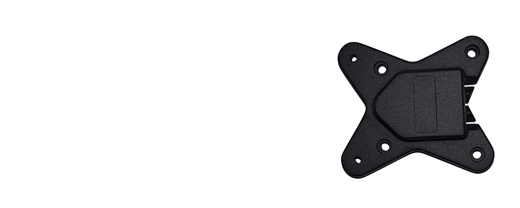



Aluminum Alloy Furniture Connectors: Die-Casting Technology Revitalizes Home Furnishing Industry
2026-01-28 15:32
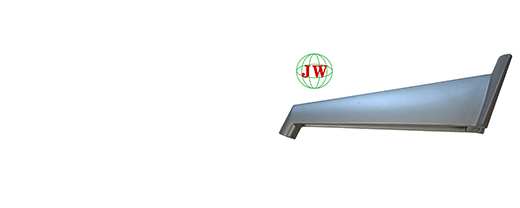
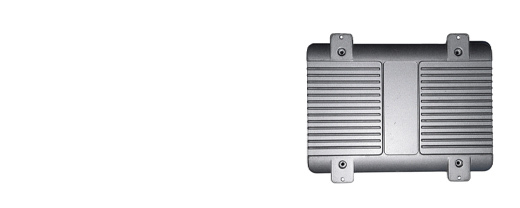
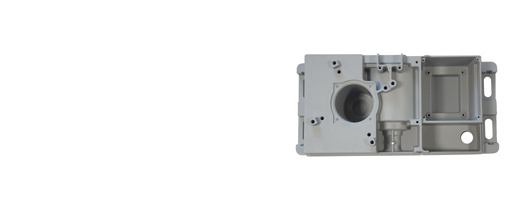
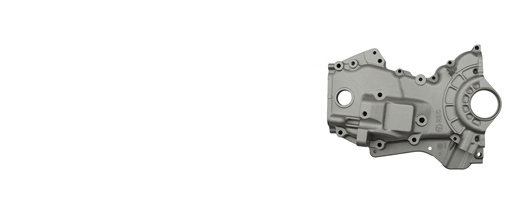
The global home furnishing industry is witnessing a technological upgrade driven by aluminum alloy die-casting components. As core accessories linking furniture structures, aluminum die-casting connectors are reshaping the industry with their superior precision, durability, and lightweight performance. Driven by the trends of flat-pack e-commerce furniture, smart home integration, and green consumption, the market demand for high-quality aluminum alloy furniture fittings is soaring. According to industry statistics, the global market size of aluminum die-casting furniture connectors is expected to reach $9.2 billion, with a steady year-on-year growth of 8.3%, and aluminum alloy products account for over 78% of the total market share due to their cost-effectiveness and sustainability <superscript:4.
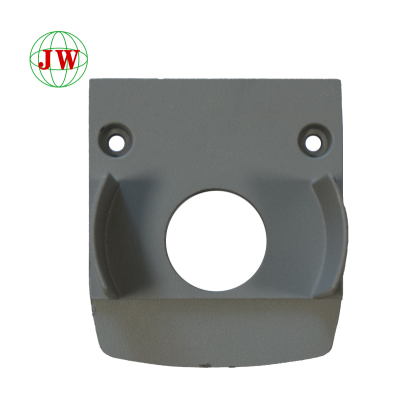
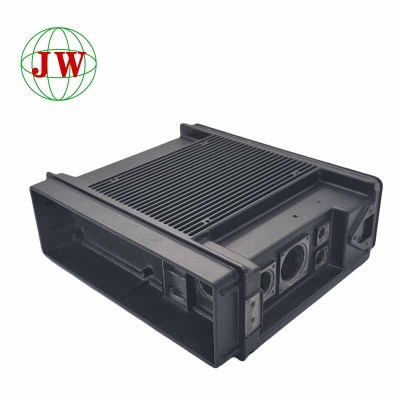
Technological innovation in die-casting is the core driver of product upgrading. High-pressure die-casting technology has become the mainstream production method for aluminum alloy furniture connectors, enabling one-piece molding of complex structures with dimensional tolerance controlled within ±0.1mm, which reduces assembly time by 30% compared to traditional split parts <superscript:2. Leading enterprises such as Yongzhu Casting have introduced 2,000-ton high-pressure die-casting presses, realizing mass production of integrated connectors with integrated bosses and alignment ribs, eliminating the need for secondary welding and improving structural stability <superscript:2. Vacuum die-casting technology is widely applied to high-end products, reducing surface bubbles and flow marks, and achieving mirror-smooth blanks that can be directly coated without secondary polishing <superscript:3.
Material optimization enhances the comprehensive performance of aluminum alloy die-casting connectors. ADC12 aluminum alloy remains the preferred material for furniture fittings, boasting excellent die-casting fluidity and mechanical strength, and can withstand 50,000-cycle abrasion tests after anodizing or powder coating <superscript:2. Recycled aluminum alloy applications are accelerating, with the utilization rate having risen from 35% in recent years to 48% currently, reducing carbon emissions per unit product by about 60% while maintaining product performance <superscript:1. Enterprises are also developing low-lead and cadmium-free environmental protection alloys to meet strict EU and North American environmental standards, expanding export channels for aluminum alloy furniture fittings<superscript:1.
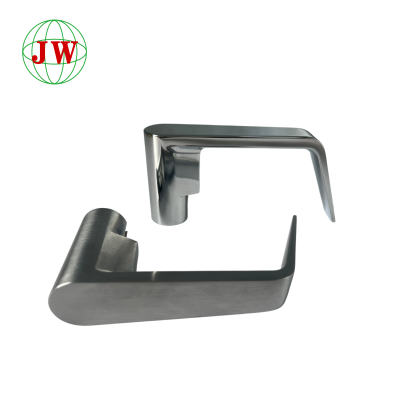
The integration of aesthetics and functionality has become a new competitive focus. Modern furniture design pursues the unity of style and practicality, prompting aluminum die-casting connectors to break away from pure functionality. Through precision surface treatment processes such as anodizing, powder spraying, and wire drawing, manufacturers create a variety of textures and colors that match different furniture styles, from minimalist matte black to luxurious champagne gold <superscript:3. Xiongsheng Hardware, a domestic leader, achieves color consistency with ΔE < 1.0 by adopting Pantone standard color matching, ensuring uniform finishes across mass-produced components <superscript:2. Customized die-casting solutions are also popular, allowing manufacturers to tailor connector structures for sofas, tables, and cabinets, balancing easy assembly with load-bearing capacity <superscript:3.
The global market pattern shows obvious regional characteristics, with Asia-Pacific as the core supply hub. Chinese enterprises, relying on mature die-casting technology and cost advantages, occupy 45% of the global market share, with products exported to Europe, America, and Southeast Asia <superscript:4. Yongzhu Casting, with an annual capacity of 4,000 tons, has become a key supplier for international furniture brands, providingaluminum die-casting sofa frame brackets and table connectors that support up to 200kg and have a shear strength of ≥1,500N <superscript:4. The European market demands high environmental protection and durability, driving enterprises to obtain ASI certification and meet CBAM carbon footprint requirements, while the North American market favors cost-effective flat-pack furniture connectors <superscript:1.
Sustainability and intelligence are reshaping the industry’s development direction. Die-casting enterprises are accelerating the construction of green production lines, adopting electric induction melting furnaces and waste heat recovery systems to reduce unit energy consumption by 15%-20% <superscript:1. Intelligent manufacturing is deepening, with MES systems and optical detection equipment widely used to achieve real-time monitoring of the die-casting process and a 99.2% product qualification rate <superscript:3. The industry concentration is further improving, with top 10 enterprises accounting for 40% of the market share, while small and medium-sized enterprises are focusing on niche markets such as micro aluminum alloy die-casting components <superscript:1.
Looking ahead, the aluminum alloy die-casting furniture connector industry will focus on precision improvement, green innovation, and global layout. With the deep integration of lightweight design and sustainable development concepts, die-casting technology will continue to break through, making connectors more integrated, aesthetic, and environmentally friendly. Enterprises that grasp the trends of material innovation and intelligent production will gain a competitive edge, driving the global furniture industry towards high-quality development
Related News
More >-
![Which Industries Will Drive Aluminum Die Casting Demand in 2026–2030?]()
Which Industries Will Drive Aluminum Die Casting Demand in 2026–2030?
This industry news forecasts aluminum **high pressure die casting** market demand from 2026 to 2030, highlighting five core sectors pushing market expansion. Electric mobility remains the largest driver, with **giga-casting** technology integrating vehicle structural components. Energy storage and renewable energy industries grow rapidly, requiring lightweight aluminum cast housings for inverters and battery enclosures. Industrial automation and robotics boost orders for precision **die cast** mechanical housings and brackets. Telecom and consumer electronics demand thin-wall, heat-dissipating cast parts for base stations and electronic enclosures. The construction and architectural hardware sector delivers steady demand for corrosion-resistant aluminum cast fittings. Suppliers must optimize die cavity design and control porosity defects to meet tight tolerance and sustainability requirements from global buyers.
-
![How to Extend the Service Life of Aluminum Die Casting Molds?]()
How to Extend the Service Life of Aluminum Die Casting Molds?
This industry news explores practical approaches to extend service life of aluminum **die‑casting** molds. It analyzes major failure modes including thermal fatigue, soldering and mechanical impact. Proper mold steel selection, standardized heat‑treatment and nitriding pre‑treatment lay a solid foundation for **tooling**. Optimized die‑casting parameters such as mold temperature, injection speed and release‑agent spraying reduce thermal‑mechanical load per **shot**. Strict on‑site cleaning, inspection and preventive maintenance detect minor defects early. In addition, balanced repair‑or‑replacement judgment prevents excessive investment on severely damaged molds. Following these measures helps foundries stabilize casting quality, cut down downtime and lower comprehensive manufacturing cost for mass‑production aluminum components
-
![Can you provide matte satin titanium gold finish on die casting parts?]()
Can you provide matte satin titanium gold finish on die casting parts?
This article addresses whether matte satin titanium gold finish can be achieved on **die‑casting** parts. Premium satin‑titanium‑gold decorative surface mostly relies on PVD coating after proper pre‑treatment including satin brushing and cleaning. Final appearance heavily depends on casting substrate quality; alloy selection, **tooling** design and internal porosity greatly influence finished yield. Common risks include batch‑to‑batch gloss deviation, blisters from hidden porosity and geometry‑related uneven coating. Total cost rises from mould optimisation, sealing, brushing and vacuum coating workflows. Buyers are advised to provide physical colour‑gloss reference, validate full‑process prototypes and define clear cosmetic acceptance criteria, rather than trusting digital renderings, to stabilise quality for mass‑production decorative die‑cast components.
-
![How to Balance Tooling Expense and Mass Production Cost for Custom Cast Parts?]()
How to Balance Tooling Expense and Mass Production Cost for Custom Cast Parts?
Custom cast parts projects face inherent trade‑offs between one‑time tooling investment and recurring mass‑production cost in die‑casting industry. Many stakeholders only compare initial die quotations while ignoring full‑lifecycle risks including high scrap rate, frequent die maintenance and extra secondary machining. This article analyses five practical dimensions: core amortization cost logic, early‑stage DFM optimization, volume‑oriented selection of tool‑steel and cavity quantity, process tuning to shorten cycle time and improve gating system performance, plus flexible commercial cooperation modes. It points out that cheap tooling often creates hidden mass‑production losses. Rational decisions require evaluating total‑cost‑of‑ownership rather than one‑time expenditure, matching tool specification with real output volume, so manufacturers and purchasers obtain balanced quality and economic benefits for custom cast components.
-
![What surface treatment do you apply on die casting tooling cavity?]()
What surface treatment do you apply on die casting tooling cavity?
Centered on cavity surface treatment solutions for die casting mold under high-pressure die casting, this article elaborates five key sections: severe cavity working environment, four mainstream protective coating technologies, how coatings eliminate batch die casting defects, matching rules based on output and CNC machining allowance of aluminum die casting parts, plus cost and service life comparison of each finish. Plasma nitriding serves as basic low-cost treatment, while TD coating offers top anti-adhesion performance for long-run mass production. PVD suits high-gloss appearance castings. Skipping cavity coating reduces upfront tooling expense yet triggers persistent blank flaws and extra post-processing cost.
-
![What tolerance can you guarantee on die casting threaded inserts?]()
What tolerance can you guarantee on die casting threaded inserts?
This article answers the core question about guaranteed tolerance of die casting threaded insert, dividing tolerance into commercial, precision and ultra-precision three grades adapted to diverse assembly scenarios. It analyzes molten aluminum temperature, insert placement and mold wear as main tolerance influencing factors in high-pressure die casting process. Optimized positioning and cooling structure of die casting tooling stabilize regular insert tolerance effectively. Pre-production DFM analysis avoids structural tolerance risks by checking wall thickness, insert spacing and assembly demands. For ultra-tight tolerance beyond pure die casting capability, post-casting CNC machining including thread tapping and position reaming is adopted to upgrade precision. The factory provides clear hierarchical tolerance standards, full quality inspection and pre-sample confirmation to match global buyer’s hardware assembly and plating production needs.
-
![What is the difference between zinc and aluminum die casting parts?]()
What is the difference between zinc and aluminum die casting parts?
There are comprehensive differences between zinc and aluminum die cast parts. Zinc alloy has a lower melting point, better fluidity and lower mold loss, ideal for delicate decorative hardware and low-load movable parts, but it is prone to creep deformation under long-term load. Aluminum alloy is lighter, with higher structural strength and better natural corrosion resistance, making it suitable for load-bearing components and outdoor products. Zinc castings match well with electroplating, while aluminum ones adapt better to spraying and anodizing. Material selection should be based on product weight, load, service environment, appearance needs and production budget.
-
![What is the Difference Between Aluminum Die Casting and Sand Casting?]()
What is the Difference Between Aluminum Die Casting and Sand Casting?
This article compares aluminum high-pressure die casting and sand casting from five core aspects. Die casting uses reusable metal molds with high pressure filling, featuring high dimensional accuracy, smooth surface, high production efficiency and dense internal structure. It fits large-batch, high-precision lightweight industrial parts with low unit cost for mass orders. Sand casting applies disposable sand molds and gravity filling, with low upfront cost but poor precision, rough surface and low efficiency. It suits small-batch prototypes and oversized aluminum components. Manufacturers shall select proper casting processes according to order volume, precision demands and actual application scenarios.
Get the latest price? We'll respond as soon as possible(within 12 hours)