





Which Industries Will Drive Aluminum Die Casting Demand in 2026–2030?
2026-09-28 17:58
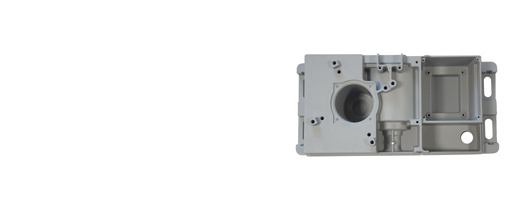
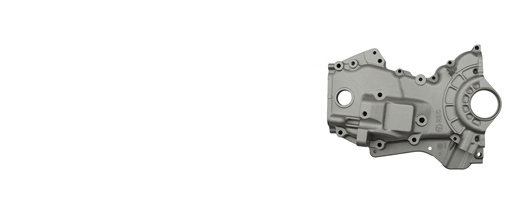
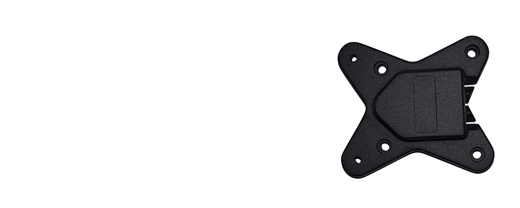
Global manufacturing is undergoing a profound shift toward lightweight, sustainable, and high-volume component production. Aluminum high pressure die casting has long been the preferred manufacturing route for mass-produced complex metal parts, offering excellent dimensional consistency, high production speed, and favorable thermal conductivity compared with iron or steel alternatives. Over the five-year window from 2026 to 2030, the demand landscape for aluminum die cast components will be reshaped by decarbonization policies, electrification trends, and advances in giga-casting technology. While traditional sectors such as fuel-powered automotive and general machinery will gradually mature, five key industries will become the primary growth engines for aluminum die casting manufacturers worldwide. Foundries and mold makers need to adjust production capacity, alloy selection and die cavity design to capture new orders, while controlling typical casting defects such as porosity to satisfy strict quality specifications.
1. Electric Mobility: The Largest Growth Engine for Aluminum Die Casting
The electric vehicle (EV) sector will continue to dominate aluminum die casting consumption between 2026 and 2030, far exceeding the demand from traditional internal combustion engine vehicles. The core advantage of aluminum lies in lightweighting: reducing vehicle weight directly lifts driving range, cuts energy consumption and improves crash safety performance. The breakthrough of giga-casting technology completely changes the manufacturing logic of vehicle body structures. Automakers merge dozens of stamped and welded metal pieces into one large integrated die cast part, dramatically cutting assembly labor, reducing tooling sets and shortening production cycles. Major EV OEMs are investing heavily in large tonnage die casting machines, creating massive demand for large-size aluminum castings including battery enclosures, motor housings, rear underbody assemblies and structural connection nodes.
For die casting foundries, this trend brings both opportunities and challenges. Large high pressure die casting parts require advanced vacuum systems inside the mold to eliminate trapped gas and minimize porosity. Poor mold cooling design or improper gating system layout can easily create internal shrinkage holes, which will fail strict leak and pressure testing for battery housings. In addition, automotive customers enforce strict carbon footprint rules. More buyers prefer castings made from recycled aluminum alloys, pushing die casters to build closed-loop scrap recycling workflows. Commercial electric vehicles, electric buses and electric construction machinery also add incremental demand. Many component suppliers expand their factory capacity to serve global EV OEMs and tier-one automotive buyers across Asia, Europe and North America. Even though demand for traditional engine and transmission castings from gasoline vehicles declines year by year, the sharp rise in per-vehicle aluminum usage for EVs fully offsets this loss and drives continuous growth for the whole aluminum die casting market.
2. Energy Storage & Renewable Energy: Fast-Growing New Demand Source
Energy storage and renewable energy will become the second most important driver for aluminum die casting demand from 2026 to 2030. Global governments push carbon reduction targets, which accelerate installation of utility-scale battery energy storage stations, residential energy storage systems, wind power equipment and photovoltaic power stations. Aluminum die cast components are widely used in inverter housings, energy storage battery trays, power junction boxes and wind turbine auxiliary parts. These parts require good heat dissipation, corrosion resistance and sufficient structural stiffness to operate reliably under long-term outdoor working conditions.
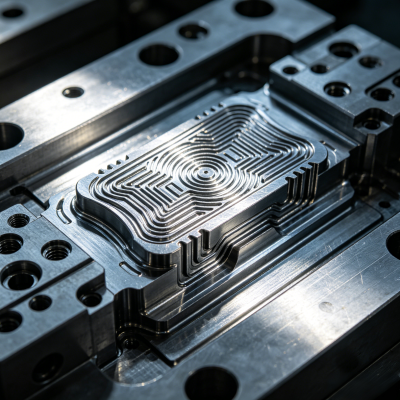
Energy storage products have special requirements for casting quality. The battery tray must withstand impact, vibration and temperature fluctuation. Any internal porosity inside the casting may cause liquid leakage risk and safety hazards. Unlike automotive large structural castings, many energy storage components are medium-sized and mass-produced, suitable for mature high pressure die casting production lines. The market growth rate of energy storage die cast parts is projected to outpace many traditional industries. At the same time, the whole supply chain is paying more attention to CBAM carbon compliance, so die casting factories must record energy consumption and raw material carbon data for every batch of castings. For mold designers, the die cavityneeds optimized cooling channels to stabilize solidification and reduce cycle time, which helps manufacturers lower unit cost for large-volume energy storage orders.
3. Industrial Automation & Robotics: Demand for Precision Die Cast Components
Global investment in smart factories and industrial robots maintains steady growth, bringing stable demand for small and medium precision aluminum die cast parts. Robot joint housings, reducer shells, sensor brackets, pump and valve bodies all rely on aluminum die casting to balance light weight and mechanical strength. Humanoid robots, as an emerging sub-sector, will also release new demand from 2027 onward. Each robot needs multiple thin-wall aluminum cast structural parts, requiring tight dimensional tolerance and smooth surface finish.
This industry has stricter precision requirements than general consumer goods. Buyers often request post-processing such as CNC machining after high pressure die casting. The casting must have low porosity to avoid oil leakage and guarantee mechanical stability during high-speed repeated movement. Mold design becomes critical: the die cavity must be manufactured with high machining accuracy, and the gating and venting structure must be carefully simulated to prevent gas trapping and cold shut defects. Compared with automotive or energy storage projects, automation projects usually have smaller batch sizes but higher profit margins. Many die casting factories develop flexible production cells to switch between different molds quickly, which helps them win multiple orders from automation equipment manufacturers.
4. Telecommunication & Consumer Electronics: Thin-Wall Casting Market Expansion
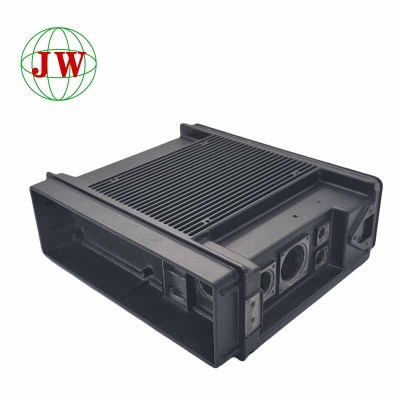
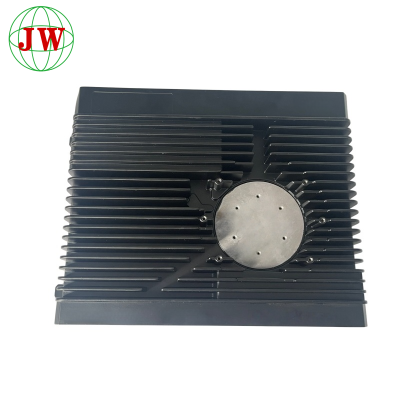
The telecom and consumer electronics sector will keep generating consistent demand for thin-wall aluminum die cast housings during 2026–2030. 5G and next-generation communication base stations need aluminum cast heat sinks and equipment housings, which leverage aluminum’s excellent thermal conductivity to dissipate heat generated by power modules. High-end consumer electronics, including audio equipment, smart home controllers and portable power devices, also adopt aluminum die cast shells for better appearance and structural rigidity.
Thin-wall die casting is technically demanding. Molten aluminum alloy must fill the thin sections of the die cavity rapidly before solidification. Improper injection speed or vent design will easily lead to incomplete filling, cold lines and porosity. Many electronics customers require secondary surface treatment, including powder coating, anodizing and painting. Surface defects on die castings will increase rejection rate and raise production cost. This market segment features diverse product types and frequent design revisions. Die casters need short mold lead time and flexible trial production capability. Although the weight of each single casting is relatively small, the huge total shipment volume of consumer and telecom products supports stable revenue for many specialized die casting manufacturers.
5. Building, Architecture & Industrial Hardware: Stable Baseline Demand
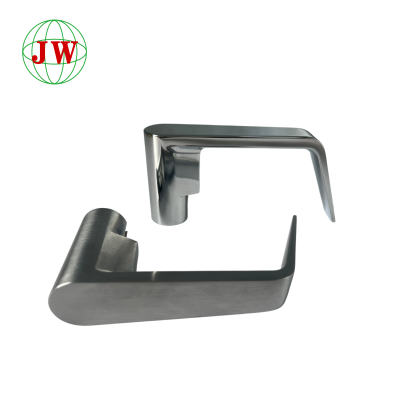
The construction and architectural hardware industry forms a reliable baseline demand for aluminum die casting in the forecast period. Custom architectural lighting components, curtain wall fittings, door and window hardware, pump and valve bodies for building water systems all adopt aluminum die cast parts. These products prioritize corrosion resistance and moderate mechanical performance, with relatively loose tolerance requirements compared with automotive or robot parts.
While growth rate is moderate, this market is less sensitive to short-term economic cycles. It provides steady order flow for die casting foundries, especially for factories focusing on medium and small batch custom castings. For these components, high pressure die casting delivers competitive cost when annual volume reaches thousands of pieces. Mold maintenance is simpler, and the standard of porosity inspection is less rigorous than EV battery parts. The die cavity modification is also easier when customers adjust architectural design. As global infrastructure investment continues, this sector will remain a vital complementary market for aluminum die casting suppliers between 2026 and 2030.
Conclusion
From 2026 to 2030, the global aluminum die casting industry will experience a structural transformation. The old growth driven by traditional machinery and fuel vehicles will fade, while five industries including electric mobility, energy storage, industrial automation, telecom electronics and architectural hardware will become the core demand pillars. Electric mobility and energy storage represent high-growth, high-opportunity markets with strict technical thresholds, while automation, electronics and construction hardware supply diversified and stable orders.
For die casting manufacturers, winning new orders requires continuous investment in mold technology, especially die cavityprecision design, process simulation and porosity control. Mastery of high pressure die casting and giga-casting processes will separate competitive suppliers from low-end foundries. Sustainability and carbon compliance will gradually become basic entry requirements for international buyers. Manufacturers who can adapt alloy grades, optimize mold cooling and balance quality, cost and delivery will capture the biggest market share in this five-year boom cycle of aluminum die casting
Related News
More >-
![How to Extend the Service Life of Aluminum Die Casting Molds?]()
How to Extend the Service Life of Aluminum Die Casting Molds?
This industry news explores practical approaches to extend service life of aluminum **die‑casting** molds. It analyzes major failure modes including thermal fatigue, soldering and mechanical impact. Proper mold steel selection, standardized heat‑treatment and nitriding pre‑treatment lay a solid foundation for **tooling**. Optimized die‑casting parameters such as mold temperature, injection speed and release‑agent spraying reduce thermal‑mechanical load per **shot**. Strict on‑site cleaning, inspection and preventive maintenance detect minor defects early. In addition, balanced repair‑or‑replacement judgment prevents excessive investment on severely damaged molds. Following these measures helps foundries stabilize casting quality, cut down downtime and lower comprehensive manufacturing cost for mass‑production aluminum components
-
![Can you provide matte satin titanium gold finish on die casting parts?]()
Can you provide matte satin titanium gold finish on die casting parts?
This article addresses whether matte satin titanium gold finish can be achieved on **die‑casting** parts. Premium satin‑titanium‑gold decorative surface mostly relies on PVD coating after proper pre‑treatment including satin brushing and cleaning. Final appearance heavily depends on casting substrate quality; alloy selection, **tooling** design and internal porosity greatly influence finished yield. Common risks include batch‑to‑batch gloss deviation, blisters from hidden porosity and geometry‑related uneven coating. Total cost rises from mould optimisation, sealing, brushing and vacuum coating workflows. Buyers are advised to provide physical colour‑gloss reference, validate full‑process prototypes and define clear cosmetic acceptance criteria, rather than trusting digital renderings, to stabilise quality for mass‑production decorative die‑cast components.
-
![How to Balance Tooling Expense and Mass Production Cost for Custom Cast Parts?]()
How to Balance Tooling Expense and Mass Production Cost for Custom Cast Parts?
Custom cast parts projects face inherent trade‑offs between one‑time tooling investment and recurring mass‑production cost in die‑casting industry. Many stakeholders only compare initial die quotations while ignoring full‑lifecycle risks including high scrap rate, frequent die maintenance and extra secondary machining. This article analyses five practical dimensions: core amortization cost logic, early‑stage DFM optimization, volume‑oriented selection of tool‑steel and cavity quantity, process tuning to shorten cycle time and improve gating system performance, plus flexible commercial cooperation modes. It points out that cheap tooling often creates hidden mass‑production losses. Rational decisions require evaluating total‑cost‑of‑ownership rather than one‑time expenditure, matching tool specification with real output volume, so manufacturers and purchasers obtain balanced quality and economic benefits for custom cast components.
-
![What surface treatment do you apply on die casting tooling cavity?]()
What surface treatment do you apply on die casting tooling cavity?
Centered on cavity surface treatment solutions for die casting mold under high-pressure die casting, this article elaborates five key sections: severe cavity working environment, four mainstream protective coating technologies, how coatings eliminate batch die casting defects, matching rules based on output and CNC machining allowance of aluminum die casting parts, plus cost and service life comparison of each finish. Plasma nitriding serves as basic low-cost treatment, while TD coating offers top anti-adhesion performance for long-run mass production. PVD suits high-gloss appearance castings. Skipping cavity coating reduces upfront tooling expense yet triggers persistent blank flaws and extra post-processing cost.
-
![What tolerance can you guarantee on die casting threaded inserts?]()
What tolerance can you guarantee on die casting threaded inserts?
This article answers the core question about guaranteed tolerance of die casting threaded insert, dividing tolerance into commercial, precision and ultra-precision three grades adapted to diverse assembly scenarios. It analyzes molten aluminum temperature, insert placement and mold wear as main tolerance influencing factors in high-pressure die casting process. Optimized positioning and cooling structure of die casting tooling stabilize regular insert tolerance effectively. Pre-production DFM analysis avoids structural tolerance risks by checking wall thickness, insert spacing and assembly demands. For ultra-tight tolerance beyond pure die casting capability, post-casting CNC machining including thread tapping and position reaming is adopted to upgrade precision. The factory provides clear hierarchical tolerance standards, full quality inspection and pre-sample confirmation to match global buyer’s hardware assembly and plating production needs.
-
![What is the difference between zinc and aluminum die casting parts?]()
What is the difference between zinc and aluminum die casting parts?
There are comprehensive differences between zinc and aluminum die cast parts. Zinc alloy has a lower melting point, better fluidity and lower mold loss, ideal for delicate decorative hardware and low-load movable parts, but it is prone to creep deformation under long-term load. Aluminum alloy is lighter, with higher structural strength and better natural corrosion resistance, making it suitable for load-bearing components and outdoor products. Zinc castings match well with electroplating, while aluminum ones adapt better to spraying and anodizing. Material selection should be based on product weight, load, service environment, appearance needs and production budget.
-
![What is the Difference Between Aluminum Die Casting and Sand Casting?]()
What is the Difference Between Aluminum Die Casting and Sand Casting?
This article compares aluminum high-pressure die casting and sand casting from five core aspects. Die casting uses reusable metal molds with high pressure filling, featuring high dimensional accuracy, smooth surface, high production efficiency and dense internal structure. It fits large-batch, high-precision lightweight industrial parts with low unit cost for mass orders. Sand casting applies disposable sand molds and gravity filling, with low upfront cost but poor precision, rough surface and low efficiency. It suits small-batch prototypes and oversized aluminum components. Manufacturers shall select proper casting processes according to order volume, precision demands and actual application scenarios.
-
![What is Aluminum Alloy Die Casting Used for?]()
What is Aluminum Alloy Die Casting Used for?
This passage mainly introduces the wide application fields of aluminum alloy die casting. Combined with five core keywords including high-pressure die casting and die casting mold, it sorts out its practical uses in automobile, home appliances, new energy, electronic communication and industrial hardware. With stable mechanical performance, excellent heat dissipation and reliable corrosion resistance, die-cast aluminum parts can form complex structures efficiently. Various surface treatments further improve product quality. It features low comprehensive cost and large-scale production capacity, becoming a mainstream processing choice for various industries worldwide.
Get the latest price? We'll respond as soon as possible(within 12 hours)