



Which Aluminum Alloy Delivers Better Corrosion Resistance for Electronic Cast Housings?
2026-09-24 15:30
1. The Core Role of Aluminum Alloy Die-Cast Housings in Electronic Equipment
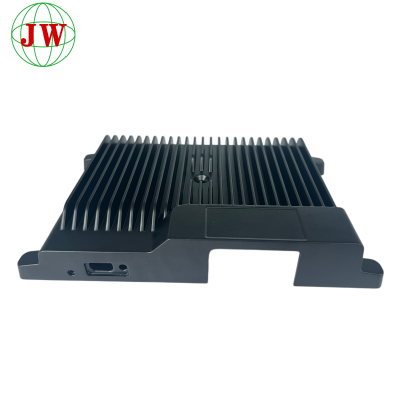
The rapid development of 5G communication, power electronics, new energy control modules and industrial controllers has raised higher standards for electronic housing materials. Electronic cast housings not only encapsulate internal circuit boards and sensitive components but also undertake heat dissipation, shock resistance and environmental isolation tasks. Among various manufacturing processes, aluminum alloy die-casting stands out for its ability to produce complex thin-walled structures with high production efficiency, stable dimensional accuracy and relatively low mass cost, which makes it the preferred process for mass production of electronic enclosures.
Unlike stamped metal shells or plastic casings, aluminum die-cast housings combine metal electromagnetic shielding capability and good thermal conductivity. However, electronic products often work in diverse environments: indoor office equipment faces humidity and dust; outdoor power electronics encounter rain, salt spray and temperature cycling; marine electronic devices suffer continuous chloride corrosion. Once the housing suffers corrosion, rust pits and cracks will appear. This will weaken structural strength, damage shielding performance and even cause leakage risks. Therefore, corrosion resistance has become one of the core indicators when engineers select aluminum alloys for electronic housings.
Many buyers and foundries tend to prioritize tensile strength and casting fluidity when choosing alloys, while ignoring long-term anti-corrosion performance. Some low-cost aluminum alloys have excellent filling ability for complicated housing structures, but they contain high copper and iron content. These elements form intermetallic phases inside the casting, which will form galvanic cells with the aluminum matrix in humid conditions, accelerating local corrosion. In high-demand electronic projects, premature corrosion failure of the housing leads to product recall and after-sales losses, far exceeding the material cost saved in the early stage. So, choosing the proper aluminum alloy grade is the first step to guarantee reliable electronic cast housings.
2. How Alloying Elements Influence Corrosion Resistance of Aluminum Castings
Pure aluminum has naturally good corrosion resistance, because a dense passive oxide film will quickly form on its surface when exposed to air. But pure aluminum has poor fluidity and low mechanical strength, and cannot be used directly for die casting of thin-wall complicated electronic housings. Manufacturers add silicon, copper, magnesium, iron and other alloying elements to pure aluminum to adjust castability and mechanical properties. These added elements change the microstructure of castings, and greatly affect the corrosion resistance.
Silicon is the main alloying element in most casting aluminum alloys. Silicon particles distributed in the aluminum matrix can improve melt fluidity, enabling the molten alloy to fill fine and complex mold cavities during high-pressure die-casting. Silicon itself has low electrochemical activity. When silicon content is within a reasonable range, it will not significantly reduce the alloy’s corrosion resistance. High-silicon aluminum alloys are widely adopted for electronic shells requiring intricate structures.
Copper is an element that greatly harms corrosion performance. Copper-rich intermetallic compounds have much higher electrode potential than the aluminum substrate. In humid environments with electrolyte, galvanic corrosion will occur. The aluminum matrix becomes the anode and dissolves preferentially, forming pitting corrosion. The higher copper content, the faster the corrosion rate. This is the key reason that high-copper die-casting alloys are not suitable for salt spray heavy environments.
Magnesium can improve alloy strength. Moderate magnesium addition has less negative impact on corrosion resistance compared with copper. Iron is an inevitable impurity in recycled aluminum raw materials. Excess iron will form needle-shaped iron-rich phases inside the casting. These phases easily trigger pitting corrosion and also reduce material toughness. For electronic cast housings with high anti-corrosion requirements, foundries need to control raw material purity and limit iron impurity content.
3. Comparison of Corrosion Performance of Typical Aluminum Alloys for Electronic Die Casting
The aluminum alloys commonly used for electronic die-cast housings include ADC12, A380, A413 and A356. Each grade has distinct corrosion resistance characteristics, applicable to different electronic application scenarios.
ADC12 is the most widely used aluminum die-casting alloy in Asia. It has high silicon content, outstanding melt fluidity, easy to form thin-wall complex housing structures, and low raw material cost. But ADC12 contains relatively high copper and iron. Its corrosion resistance is only moderate. It can be used for indoor electronic equipment with dry environment, such as indoor power adapters and control boxes. If exposed to salt spray or persistent high humidity, pitting corrosion will emerge quickly without surface protection.
A380 is a mainstream North American die-casting alloy, similar to ADC12. It balances casting performance and mechanical strength, also with copper addition. Its anti-corrosion ability is comparable to ADC12, suitable for indoor consumer electronics casings. It is not recommended for coastal, outdoor and corrosive working conditions.
A413 is a low-copper aluminum alloy. It has high silicon content and almost no copper. Its corrosion resistance is obviously better than ADC12 and A380. The material has excellent casting fluidity, suitable for thin-walled electronic housings with complex shapes. A413 can withstand longer salt spray tests, and fits outdoor low-voltage electronic shells and communication components.
A356 is usually produced by gravity casting or low-pressure casting rather than high-pressure die-casting. It contains magnesium without copper. A356 has excellent corrosion resistance, good ductility and stable mechanical performance. However, its production cycle is longer and cost higher than high-pressure die-casting alloys. It is often selected for high-end electronic equipment and aerospace electronic housings that demand superior anti-corrosion and reliability.
In short, from the perspective of corrosion resistance ranking: A356 > A413 > A380 ≈ ADC12. If the electronic housing works in a harsh corrosive environment, low-copper alloy grades should be prioritized. For ordinary indoor products, ADC12 / A380 can meet requirements with proper surface treatment.
4. Surface Finishing: Supplementary Protection to Improve Corrosion Resistance of Castings
Even if we select the proper aluminum alloy, the as-cast surface of die-casting parts inevitably has tiny pores, oxide scales and segregation zones. These defects become the starting points of corrosion. Surface treatment acts as an important barrier to isolate the aluminum substrate from moisture and corrosive media, greatly extending the service life of electronic cast housings. Common treatments include chromate conversion coating, non-chromate passivation, powder coating and anodizing.
Conversion coating (passivation) forms a thin chemical film on the casting surface. It improves the adhesion of subsequent paint layers and provides basic temporary anti-corrosion protection. It is commonly used as pretreatment for electronic housings. Powder coating forms a thick, continuous polymer covering layer. It has strong resistance against moisture, salt spray and chemical erosion. It is widely applied on power electronic die-cast shells. The coating can also be made into different colors for product appearance needs.
Anodizing builds an aluminum oxide film on the aluminum surface through electrochemical reaction. The oxide film has high hardness and good corrosion resistance. But high-pressure die-casting alloys with high silicon content such as ADC12 are difficult to achieve uniform anodizing effect, because silicon particles will make the surface dark and mottled. A413 and wrought aluminum alloys perform much better for anodizing.
It is worth noting that surface finishing cannot fully compensate for wrong alloy selection. If a high-copper alloy is used for long-term coastal application, once the coating has scratches or pinholes, local galvanic corrosion will develop rapidly under the coating, leading to coating peeling and housing failure. Material selection and surface protection must be matched together.
5. Alloy Selection Principles for Electronic Cast Housings in Different Service Environments
When purchasing and engineering teams select aluminum alloy for electronic cast housings, corrosion resistance should not be considered alone. They need to comprehensively evaluate working environment, structural requirement, production process, tooling investment and total cost.
For indoor dry environment electronics, such as desktop power controllers, indoor drive modules: ADC12 or A380 is acceptable. These alloys have good castability, low material cost and mature die-casting process. Simple passivation plus powder coating can meet anti-corrosion needs, which is the most cost-effective solution for mass production.
For outdoor equipment, coastal devices and products exposed to high humidity and salt mist: low-copper alloy A413 is recommended. Combined with robust powder coating, it can resist salt spray erosion for a long time. If the product has extremely high reliability requirements and the production batch is not huge, A356 gravity casting can be considered.
Besides environment, product structure also affects decision-making. If the housing has ultra-thin walls, intricate ribs and narrow flow channels, high silicon alloys with excellent fluidity are required. If the structure is simple, the engineer has more room to choose alloys with better corrosion resistance.
Manufacturers should also carry out salt spray test according to the product specification during sample verification. Testing can verify whether the matched alloy and surface treatment can reach the anti-corrosion target, avoiding problems discovered after mass shipment.
In conclusion, there is no universal "best" aluminum alloy for all electronic cast housings. The best choice depends on the product’s working environment. ADC12 and A380 are economical for indoor use; A413 offers balanced castability and corrosion resistance for outdoor electronics; A356 delivers premium anti-corrosion performance with higher cost. Combined with suitable surface finishing, the aluminum die-cast housing can effectively avoid corrosion, protect internal electronic components and guarantee stable long-term operation of electronic products
Related News
More >-
![What test reports can you supply for die casting corrosion resistance?]()
What test reports can you supply for die casting corrosion resistance?
Corrosion‑resistance test reports are vital supporting documents for global **die‑casting** component procurement. Manufacturers can supply third‑party lab certificates including salt‑spray, humidity‑heat cycle and chemical‑resistance tests, alongside factory in‑house inspection records. Third‑party reports carry high‑recognition for cross‑border compliance audit, while internal documents work only as auxiliary reference. Test results are heavily affected by **alloy grade**, **surface‑treatment** technology and **tooling** status. It must be noticed that reports apply only to submitted samples and cannot fully represent all mass‑production goods. Buyers are advised to clarify test standards, sample sources and cost‑bearing rules in advance to prevent misunderstanding in **die‑casting** project cooperation.
-
![How to arrange pickup of our finished die casting tooling?]()
How to arrange pickup of our finished die casting tooling?
Picking up finished die‑casting tooling is a high‑risk procedure easily ignored in custom casting projects. Damaged cavities, missing inserts and customs delays often stem from unclear ownership, poor packaging and incomplete paperwork rather than casting defects. This article discusses five key segments: pre‑pickup ownership and technical acceptance, anti‑rust shock‑resistant export‑grade packaging for heavy molds, logistics and lifting selection, cross‑border customs documentation requirements, and post‑delivery unpacking inspection & storage. Operators should check full component inventory, apply cargo insurance and verify the gating system through dry mold test after arrival. Well‑managed tooling hand‑over protects investment and guarantees stable cycle time for follow‑up mass‑production of die‑cast parts.
-
![Which Mold Steel Works Best for Large Integrated Aluminum Die Castings?]()
Which Mold Steel Works Best for Large Integrated Aluminum Die Castings?
This article focuses on mold steel selection for large integrated die casting under ultra-large tonnage high-pressure die casting (HPDC) machines, analyzing extreme thermal and mechanical loads unique to oversized molds. It elaborates five critical performance metrics including mold hardenability, anti-thermal fatigue cracking capacity and anti-aluminum soldering property, and compares three tiers of mainstream hot-work steels (standard H13, ESR upgraded variants, ultra-high hardenability specialized grades). The text explains how poor hardenability triggers penetrating mold cracking and proposes graded zoned steel matching strategies for different production batches, paired with auxiliary thermal balance and surface treatment processes to extend mold service life and cut unplanned downtime for integrated aluminum structural castings
-
![What Surface Finishing Fits Premium Industrial Aluminum Cast Components?]()
What Surface Finishing Fits Premium Industrial Aluminum Cast Components?
Centered on the topic of selecting proper surface finishing for premium aluminum die casting parts, this article analyzes five key dimensions including casting defects from high-pressure die casting, finishing matching rules for different alloy components, pre-processing control of CNC machining allowance, optimization design of die casting mold, and cost-durability comparison of mainstream surface treatments. Common die casting defects like air holes and cold shut severely damage coating adhesion and surface uniformity. Reasonable machining allowance and early mold structural optimization effectively reduce finishing scrap and rework. Six mainstream industrial finishes including powder coating, hard anodizing and PVD have respective applicable scenarios. Matching finishing must combine blank casting quality, service environment and functional demands to guarantee stable high-end appearance and long-term corrosion resistance of precision aluminum cast components.
-
![How Much Does Aluminum Alloy Die Casting Cost?]()
How Much Does Aluminum Alloy Die Casting Cost?
This article analyzes the full cost composition of aluminum alloy high-pressure die casting from five aspects. The total cost includes one-time mold tooling fee, aluminum raw material cost, production processing cost, post-processing & quality inspection cost, as well as logistics and packaging expense. Part complexity, alloy grade, order volume and surface treatment demands greatly affect final unit price. Die casting has high upfront mold cost but low unit price for mass orders. Reasonable structure optimization and bulk procurement can effectively reduce overall procurement cost for die casting projects.
-
![What Tolerance Can Aluminum Alloy Die Casting Reach?]()
What Tolerance Can Aluminum Alloy Die Casting Reach?
This article explores the tolerance capability of aluminum alloy die casting, analyzing key factors including mold accuracy, process parameters, part structure and alloy properties. Typical tolerance ranges vary by part type, with general industrial parts achieving ±0.10mm–±0.30mm, while precision electronic parts can reach ±0.03mm–±0.10mm. Ultra-tight tolerances require secondary machining like CNC finishing. Improving tolerance stability demands mold maintenance, process monitoring and raw material control. Designers should align tolerance settings with die-casting standards and communicate with manufacturers to balance performance and cost, ensuring parts meet assembly requirements while controlling scrap rates.
-
![Where to Find Reliable Aluminum Alloy Die Casting Suppliers?]()
Where to Find Reliable Aluminum Alloy Die Casting Suppliers?
This article explains how to find reliable aluminum alloy die casting suppliers from six dimensions including sourcing channels, qualification verification, technical strength, quality control, delivery capability and trial cooperation. Reliable die casting factories must hold complete certifications, own professional production and testing equipment, and implement full-process quality management. Purchasers can screen suppliers via B2B platforms and industry exhibitions, verify their strength strictly, and confirm reliability through trial orders. Stable process, on-time delivery and sound after-sales service are key to long-term cooperative supply chains.
-
![Can Aluminum Alloy Die Casting Do Anodizing?]()
Can Aluminum Alloy Die Casting Do Anodizing?
This article explores whether aluminum die casting supports anodizing by analyzing process principles, alloy adaptability, common defects and optimization solutions. Low-silicon die-casting aluminum alloys like A360 and A413 are suitable for high-quality anodizing, while high-silicon A380 and ADC12 tend to cause color difference and foggy surfaces. Optimized hard anodizing works for functional demands, while powder coating and electrophoresis are ideal alternatives. Reasonable matching ofsurface treatment processes and alloys ensures stable appearance and performance of die-cast parts.
Get the latest price? We'll respond as soon as possible(within 12 hours)