


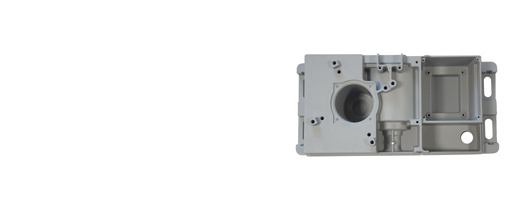
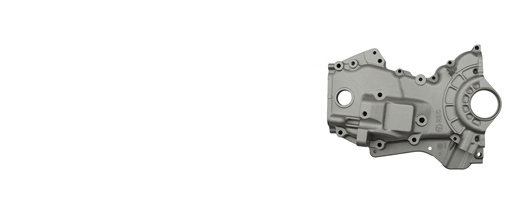




Can you customize die casting tooling according to our 3D STP drawings?
2026-06-23 15:31
Can you customize die casting tooling according to our 3D STP drawings?” This is the most frequent technical inquiry raised by global purchasers in automotive hardware, jewelry display frames, new energy equipment and consumer electronics sectors. For die casting manufacturers, the STP file acts as the authoritative technical bridge between client product design and factory mold fabrication, directly determining the dimensional accuracy, production stability and post-processing compatibility of finished castings. Many overseas customers hold doubts about whether foundries can fully restore complex product structures from STP files, handle design optimization during tooling development, and deliver qualified mass-production molds that match downstream surface treatment standards. This article systematically explains the complete technical logic, standardized operation flow, quality control standards and post-service supporting capacity of customizing die casting tooling based on customer-provided STP drawings, resolving all common concerns from international buyers.
1. The Core Value of STP 3D Files for Custom die casting tooling Development
STP (STEP) is an ISO-standard neutral 3D CAD format, widely recognized as the most reliable data carrier in the global die casting industry compared with IGES, STL and other model formats. When customers submit STP drawings for custom die casting tooling, the file carries complete solid geometric information of target parts, including curved surfaces, internal boss structures, threaded insert reserved holes, wall thickness variations and assembly matching features, which lays an irreplaceable foundation for subsequent mold design work.
First of all, STP files retain full solid entity data without mesh fragmentation or surface loss defects, a common flaw of STL files. For precision aluminum alloy parts like ADC6 matte satin titanium gold display frames, thin-wall curved surfaces and invisible bottom hanging positions for plating must be 100% reproduced on the mold cavity. If the 3D model has broken surfaces during format conversion, engineers cannot design reasonable parting lines, gating systems and exhaust slots, leading to incomplete filling, shrinkage porosity and visible hanging marks after high-pressure die casting. STP format avoids such data loss risks, enabling mold designers to capture every subtle structural requirement defined by customers.
Second, STP realizes cross-platform CAD compatibility. Clients may complete product design via CATIA, SolidWorks, UG NX or Creo, while mold workshops rely on UG and AutoCAD for tooling layout. STP files support seamless data transmission between different design software without manual redrawing, cutting early communication cycles by over 30%. For cross-border cooperation projects, this compatibility eliminates technical barriers caused by inconsistent design tools; purchasers only need to upload a single STP file instead of adjusting models to match the factory’s software system.
Third, STP data supports synchronous pre-judgment of downstream processing standards, such as the PVD surface coating thickness requirement of 0.10–0.15μm proposed by jewelry frame clients. Engineers can directly measure wall thickness, edge fillet and groove depth from STP models, predicting whether sharp corners will cause uneven titanium gold deposition or thick-walled areas will generate air pockets that ruin coating appearance. Compared with 2D PDF drawings that only mark partial dimensions, STP 3D models deliver full product visual information, allowing factories to propose targeted structural adjustments at the early tooling customization stage instead of modifying molds after sample production.
For customers, providing complete STP files also reduces ambiguous technical disputes. Every dimensional tolerance, assembly boss and hidden hanging position is recorded in the 3D model, forming a binding technical basis for subsequent mold acceptance, sample trial and mold revision. Without standard STP drawings, factories can only rely on fragmented 2D sketches or physical samples to reverse design tooling, inevitably introducing cumulative dimensional errors and extending development lead time by 1–2 weeks.
2. Standard Workflow: From Customer STP Drawings to Formal DFM analysis
After receiving client STP drawings, professional die casting manufacturers launch a standardized five-stage process centered on DFM analysis, which is the core link confirming whether custom die casting tooling can fully meet customer production demands. The whole flow is fully based on STP 3D data, with no subjective guesswork on product structure.
Stage one: STP file data inspection and repair. Mold engineers import the STP model into UG NX to detect gaps, non-manifold edges and missing entity features. Minor geometric defects caused by customer export errors are automatically fixed via CAM software; severe structural data damage will be fed back to clients for re-uploading complete STP files before proceeding to the next step. This inspection ensures the integrity of data used for all follow-up tooling design and simulation.
Stage two: Comprehensive DFM analysis report output. DFM (Design for Manufacturing) analysis evaluates the product’s adaptability to high-pressure die casting technology, all operations visualized on the customer’s original STP model. Key inspection items include minimum wall thickness, draft angle, undercut structures, threaded insert reserved holes, gating fluidity and exhaust layout feasibility. For example, if the STP model has zero draft angle on vertical side walls, the report will mark this risk and recommend a 1–3° draft angle adjustment to facilitate automatic ejection after die casting; if thin-wall sections below 0.8mm exist, engineers will communicate with clients about material switching or structural thickening to avoid incomplete metal filling.
Stage three: Custom tooling layout design based on revised STP model. After customer confirmation of DFM optimization suggestions, designers build the full 3D assembly drawing of die casting tooling, including mold base, core inserts, cooling channels, ejection pins and overflow troughs, all dimensionally mapped from the original STP product model. For multi-cavity molds, the layout arrangement balances molten aluminum flow speed to guarantee consistent dimensional uniformity of all parts in one shot.
Stage four: Process simulation via STP-derived mold model. Melt flow, temperature field and solidification simulation are run on the complete tooling 3D assembly to predict shrinkage cavities, cold lines and trapped air. If simulation detects defects concentrated on product visible surfaces, engineers adjust gate positions or add exhaust slots on the mold cavity, revising the tooling design drawing before metal cutting to eliminate post-manufacturing mold modification costs.
Stage five: Technical quotation and lead time confirmation. All costs are calculated according to STP model complexity: complex curved structures require 5-axis CNC machining of the cavity, raising tooling processing fees; multi-cavity layout increases H13 tool steel consumption. The quotation clearly separates mold steel, CNC machining, heat treatment and trial production expenses, with lead time segmented into DFM review, tooling fabrication, trial sample delivery and revision cycles, fully transparent for overseas buyers.
This STP-driven DFM workflow fundamentally avoids a common industry pain point: factories produce molds against incomplete design information, only to discover structural conflicts after sample production, triggering repeated tooling revisions and delaying customer mass production schedules.
3. How STP Data Guarantees Precision Machining of mold cavity
The mold cavity is the core component of all custom die casting tooling, whose geometric accuracy directly decides the dimensional tolerance and surface smoothness of final castings. STP 3D files serve as the unique digital blueprint for CNC machining of cavity surfaces, supporting ultra-precise automatic programming without manual dimension transcription errors.
First, STP solid models generate direct CAM cutting paths for 3-axis and 5-axis CNC machines. Traditional processing relying on 2D drawings requires operators to manually input hundreds of coordinate parameters, creating human error risks that widen tolerance beyond the customer’s ±0.05mm requirement. With intact STP data, CAM software automatically identifies all curved surfaces, deep grooves and boss features of the product, generating continuous high-precision cutting codes for the H13 steel cavity block. For jewelry display frames with matte satin finish requirements, the cavity surface roughness can reach Ra0.8 after CNC machining, reducing subsequent polishing workload and matching the precondition of uniform PVD surface coating.
Second, STP data ensures consistent dimensional control of matching structures such as threaded insert holes. The client’s STP file records exact hole depth, inner diameter and position tolerance of all M6/M8 threaded inserts. During cavity electrode EDM machining, the electrode model is directly copied from STP hole features, guaranteeing insert tight fit after die casting and eliminating thread slipping defects in finished parts. Many purchasers previously encountered loose inserts because factories reversed hole sizes from physical samples without STP reference; standardized STP input completely solves this matching precision issue.
Third, STP 3D models support one-to-one coordinate inspection after cavity machining. The quality control team uses a 3D coordinate measuring machine (CMM) to scan the finished cavity block, comparing measured point cloud data with the original customer STP model to generate a full dimensional deviation report. Any feature exceeding tolerance is sent back to CNC rework before mold assembly, ensuring the cavity 100% restores the geometric requirements defined in the client’s STP drawing. This closed-loop precision inspection system is impossible to implement with only 2D paper drawings.
For high-end projects requiring premium appearance castings, the cavity’s invisible hanging position design also relies on STP data analysis. Engineers mark the customer-specified bottom base and back hanging zones directly on the STP model, designing matching tooling contact points so hanging marks generated during PVD surface coating will not appear on front and side decorative surfaces, fully meeting premium jewelry showcase standards.
4. Matching STP Custom Tooling with Mass high-pressure die casting Production Demands
Customized die casting tooling developed from STP drawings is not only required to replicate product geometry, but must also adapt to stable long-term mass high-pressure die casting production, covering alloy compatibility, cycle time control and tool service life standards proposed by global buyers.
STP model analysis allows engineers to select matched mold steel grades according to customer target alloys. If clients adopt ADC6 aluminum magnesium alloy with high magnesium content, molten metal carries strong corrosivity at 680°C casting temperature; the STP model’s thin-wall and deep groove features indicate frequent high-speed metal scouring on cavity surfaces, so H13 hot work tool steel with vacuum heat treatment is selected for the cavity to extend tool life to over 80,000 shots. For ZL102 silicon-aluminum alloy parts with lower corrosivity, standard pre-hardened mold steel can be used to cut customer tooling costs without sacrificing production stability.
Meanwhile, STP-based cooling channel layout optimizes die casting cycle time. Engineers embed conformal cooling pipes following the contour of product thick-walled areas extracted from the STP model, accelerating molten aluminum solidification and shortening each casting cycle by 3–5 seconds. For mass production orders over 50,000 pieces monthly, this optimization drastically boosts output and reduces unit casting processing fees for customers. Without STP 3D data, cooling channels can only be arranged in straight lines, creating uneven temperature distribution inside the mold and triggering consistent shrinkage defects on mass-produced parts.
In addition, STP drawings reserve space for mass-production auxiliary structures such as overflow troughs and exhaust slots on the mold cavity. During continuous high-pressure die casting, trapped air inside the mold will form bubbles that ruin the substrate for subsequent PVD surface coating. By analyzing the product’s enclosed cavity areas on the STP model, designers add targeted exhaust structures to discharge gas during injection, ensuring a pore-free casting surface ideal for matte satin titanium gold plating. Many low-quality custom tooling projects ignore exhaust layout due to missing complete 3D model information, resulting in all trial samples failing coating inspection and causing massive customer raw material waste.
For customers with long-term order plans, STP files also support mold storage and secondary development. Factories archive the original STP model together with finished tooling design drawings; when clients launch upgraded product versions, engineers directly modify the STP model to adjust cavity structures, completing mold revision within 3–5 working days instead of rebuilding full tooling from scratch, greatly lowering secondary development costs.
5. Post-Tooling Cooperation: Sample Trial, Revision and PVD surface coating Alignment
After completing die casting tooling fabrication from STP drawings, the full service chain extends to trial sample delivery, mold revision and surface treatment coordination, all still anchored to the customer’s original STP 3D data.
First, trial sample inspection is compared against STP model dimensions. After the first high-pressure die casting trial run, 3–5 finished samples are delivered to clients alongside a full CMM inspection report that cross-references all measured dimensions with the STP drawing’s nominal values. If dimensional deviations or structural defects appear, engineers modify the mold cavity based on STP feature data without requesting customers to resubmit design files. Minor structural adjustments such as fillet enlargement or boss height modification can be finished within 2 working days, accelerating sample approval progress.
Second, mold revision standards are locked by STP technical specifications. If customers update product designs after sample evaluation, they only need to send a revised STP file; the factory quantifies revision fees based on the modified area of the cavity extracted from the new model, avoiding arbitrary cost increases. This transparent revision mechanism is highly recognized by cross-border purchasers, who can clearly judge whether structural changes are minor adjustments or full cavity remachining via STP model comparison.
Third, pre-coating structural coordination unifies STP design and PVD surface coating requirements. As mentioned by jewelry frame buyers, visible hanging marks on decorative surfaces are strictly forbidden. Engineers recheck the hanging position layout marked on the STP model before mass trial production, adjusting tooling contact points to guarantee all plating contact traces are hidden on the product’s bottom or back invisible areas. The STP model also verifies edge fillet radii to prevent sharp corners from causing inconsistent titanium gold thickness (0.10–0.15μm), ensuring the finished casting fully matches the customer’s matte satin gold reference photos.
Finally, after sample confirmation for mass production, the factory retains the complete STP file, DFM report, mold 3D assembly drawing and cavity inspection records as permanent technical archives. If customers need mold pickup, outsourcing PVD processing or batch production expansion later, all technical documents derived from the original STP drawing can be provided immediately, supporting seamless long-term cooperative management of custom die casting tooling.
Conclusion
The question “Can you customize die casting tooling according to our 3D STP drawings?” receives a definitive professional affirmative answer from qualified die casting manufacturers. STP 3D files act as the foundational digital carrier running through every link of tooling customization, from initial DFM analysis, precision mold cavity CNC machining, mass high-pressure die casting process matching to post-sample trial and PVD surface coating coordination. Complete, undamaged STP drawings eliminate technical ambiguity, dimensional errors and communication delays between buyers and mold factories, cutting product development cycles, reducing mold revision costs and stabilizing the quality of finished castings for downstream surface treatment and assembly.
For global purchasers seeking custom aluminum alloy casting tooling, submitting standardized STP 3D files is the most efficient way to unlock full technical support from manufacturers, including professional manufacturability optimization, ultra-precise cavity fabrication, stable mass production adaptation and full-cycle after-service. As the die casting industry advances toward digital cross-border collaboration, STP drawing-based custom die casting tooling development has become the universal standardized workflow for automotive, new energy and high-end decorative hardware projects worldwide.
Related News
More >-
![Why Do Aluminum Casting Molds Generate Flash During Mass Production?]()
Why Do Aluminum Casting Molds Generate Flash During Mass Production?
This industry news analyzes why aluminum casting molds produce **flash** during mass **die‑casting** production. Flash is thin metal overflow caused by molten aluminum squeezing through mold gaps, bringing extra post‑processing work, material waste and component quality risks. Key root causes cover worn or deformed **tooling**, insufficient **clamping force**, improper injection parameters, high‑fluidity aluminum alloy and unreasonable part structural design. The article provides step‑by‑step troubleshooting workflow: checking machine status, tuning process parameters, repairing worn mold mating surfaces, applying DFM optimization and setting reasonable flash tolerance. Proper control reduces flash‑related rejects, stabilizes serial production and lowers comprehensive manufacturing cost for aluminum casting components.
-
![Is It Worth Repairing Old Die Cast Molds Instead of Making New Ones?]()
Is It Worth Repairing Old Die Cast Molds Instead of Making New Ones?
This article discusses whether repairing old **die‑casting** molds is worthwhile compared to manufacturing new **tooling**. Minor local wear such as gate erosion and shallow thermal cracks can be repaired economically with welding and **CNC machining**, offering shorter lead‑time for limited remaining production. However, structural deep cracks, repeated prior repairs and high‑volume mass‑production scenarios make repair risky. Repaired molds may suffer residual‑stress cracking, dimension drift and higher scrap caused by **porosity** or inconsistent **surface finishing**. Total cost must include hidden losses from scrap and downtime besides direct repair fees. Buyers should evaluate damage severity, order volume and timeline; partial insert rebuild provides a middle solution between full repair and completely new molds for stable long‑term manufacturing.
-
![What aluminum alloy grades do you use for die casting production?]()
What aluminum alloy grades do you use for die casting production?
Aluminum alloy grade selection is critical for die‑casting output, influencing castability, mechanical performance and surface treatment effect. Mainstream grades include ADC12, A360, A380 and YL102, each with distinct strengths and limitations. Project engineers should assess load requirements, service environment, CNC machining needs and cost before finalizing material. Cross‑border projects often face risks from inconsistent naming standards and post‑tooling alloy replacement, which may trigger mold modification and delays. Buyers should share real application scenarios, while suppliers need to clarify material trade‑offs and provide test reports. Proper alloy specification effectively reduces defects and stabilizes mass‑production quality.
-
![Industry News: Aluminum Die Casting Sector Faces Dual Challenges of Intelligent Upgrade & EU CBAM Compliance in 2026]()
Industry News: Aluminum Die Casting Sector Faces Dual Challenges of Intelligent Upgrade & EU CBAM Compliance in 2026
In 2026, the **aluminum die casting** industry grows steadily driven by lightweight automotive and furniture hardware demand. Integrated **aluminum alloy die castings** help reduce product weight and production costs, while manufacturers upgrade vacuum casting and recycled aluminum melting lines to cut carbon emissions. For exporters, EU CBAM imposes strict carbon rules on HS 7616 die casting goods. European clients qualify for a de-minimis exemption if yearly imports stay below 50 MT. Factories in Foshan prepare bilingual shipment records, HAWBs and stamped weight certificates as compliance proof. Surface finishing uses Nippon powder and cost-effective imitation Tiger powder. Going forward, intelligent production and full carbon traceability will become essential competitiveness for export-focused die casting manufacturers.
-
![How to Control Deformation of Thin-Wall Aluminum Die Casting Components]()
How to Control Deformation of Thin-Wall Aluminum Die Casting Components
This article focuses on dimensional deformation problems of precision thin-wall die casting parts, analyzing five core influencing factors and solutions. Unbalanced mold thermal balance and inconsistent solidification shrinkage cause asymmetric casting warpage, while rapid forming produces hidden residual stress leading to delayed deformation after CNC processing. Thin-wall structures with low rigidity are highly sensitive to cooling difference and ejection force. Systematic optimizations including conformal cooling, balanced gating design and stress relief treatment effectively stabilize flatness and dimensional tolerance, solving the most common batch deformation defects of high-precision aluminum die casting components.
-
![What Are the Most Common Defects in High-Pressure Aluminum Die Castings?]()
What Are the Most Common Defects in High-Pressure Aluminum Die Castings?
This article focuses on frequent flaws in high-pressure die casting aluminum components, covering five core dimensions: formation of pores and shrinkage cavities, surface defects caused by flawed die casting mold design, the dual influence of CNC machining allowance on flaw coverage, severe damage casting defects bring to post-process surface finishing, and full-chain improvement plans for qualified aluminum die casting parts. Internal voids cannot be removed by CNC cutting; residual surface flaws trigger coating bubbling, discoloration and batch scrap. Optimizing mold exhaust, cooling and injection parameters is the fundamental way to reduce defects instead of simply increasing machining allowance.
-
![Can you complete CNC machining after die casting forming?]()
Can you complete CNC machining after die casting forming?
This article discusses whether full CNC machining can be conducted after high-pressure die casting forming for custom aluminum die casting parts, and confirms the scheme is mature and widely applied in industrial manufacturing. It divides analysis into five sections, covering inherent casting defects of raw blanks, reasonable configuration standards of CNC machining allowance, standardized composite production workflows, how die casting mold structure influences CNC efficiency, and cost-quality comparison between one-step casting and casting-plus-machining modes. Unprocessed cast blanks fail precision assembly limits due to dimensional deviation and surface flaws; post CNC cutting removes flash, pores and uneven layers to reach micron tolerance. Optimized mold design and proper machining allowance control reduce production costs and scrap rates, making die casting matched with full CNC machining the mainstream solution for precision aluminum structural components.
-
![How much is the modification fee for existing die casting tooling?]()
How much is the modification fee for existing die casting tooling?
Centered on the inquiry of modification fees for existing die casting tooling, this article classifies mold revisions into free minor trimming, medium paid adjustment and heavy structural reconstruction, and elaborates five key pricing factors including mold cavity revision area, supplementary steel material, post-process matching, lead time and remaining mold shot life. It breaks down modification fees into steel, processing, trial and auxiliary cost modules for transparent quotation. Pre-production DFM analysis effectively reduces unnecessary revision work and related costs by optimizing product structures in advance. Multiple cost-saving strategies such as modular inserts and synchronous post-casting CNC machining coordination are introduced to cut clients’ revision expenditure. All charges follow standardized rules for aluminum alloy high-pressure die casting production projects, clearly distinguishing free factory liability rework and customer-borne design change fees.
Get the latest price? We'll respond as soon as possible(within 12 hours)