




Can Aluminum Alloy Die Casting Make Thin-wall Parts?
2026-05-30 15:30
Aluminum alloy high-pressure die casting is widely adopted in consumer electronics, new energy vehicles, communication hardware and smart home industries for lightweight component manufacturing. Thin-wall structural parts have become a mainstream design trend to reduce product weight, save material cost and optimize internal space layout. Many buyers and design engineers wonder whether aluminum die casting is capable of producing qualified thin-wall components, as ultra-thin structures easily cause filling failure, cold shut, porosity and deformation defects. This article answers the core question comprehensively, covering achievable wall thickness range, key production barriers, optimized solutions, suitable alloys, mold design rules and practical application cases for thin-wall die casting.
1. The Minimum Achievable Wall Thickness of Aluminum Die Casting
Yes, aluminum alloy die casting can definitely produce thin-wall parts, and the industry has mature mass production capacity for ultra-thin castings. The minimum wall thickness varies based on part overall size, structural shape and die casting process parameters. For regular small aluminum die-cast parts within 100mm, the stably mass-producible thin wall thickness is 1.0mm; with optimized mold and injection systems, the limit wall thickness can reach 0.8mm.
For medium-sized parts ranging from 100mm to 250mm, the recommended safe thin wall thickness is 1.2mm to 1.5mm, as larger part span will increase molten aluminum flow resistance during cavity filling. For oversized thin-wall components exceeding 250mm, the minimum stable wall thickness is controlled above 1.8mm to avoid incomplete filling and local material shortage. Compared with gravity die casting and sand casting, high-pressure die casting owns ultra-fast injection speed and high pressure, making it the only casting process that supports large-scale thin-wall aluminum part production.
It is worth noting that wall thickness cannot be designed blindly too thin. If the local wall thickness is less than 0.8mm without special process upgrading, molten aluminum will cool down instantly before filling the full cavity, resulting in severe forming defects. Reasonable thin-wall design matching die casting process capability is the basic premise for qualified finished products.
2. Common Defects of Thin-wall Aluminum Die Cast Parts
Thin-wall die casting faces more production risks than standard-thickness parts, due to fast heat dissipation of molten aluminum and narrow flow channels inside molds. Several typical defects frequently appear in unoptimized thin-wall production. Firstly, cold shut and flow marks are the most common issues. Molten aluminum flows through long thin cavities and drops temperature rapidly, leading to failed fusion of two metal flow fronts, forming obvious welding lines on part surfaces and reducing structural strength.
Secondly, incomplete filling and material shortage happen easily. Ultra-thin cavities greatly improve flow resistance; if injection speed and pressure are insufficient, molten aluminum cannot reach the corner and edge positions of molds, causing missing material on finished parts. Thirdly, part warpage and thermal deformation are prominent. Uneven cooling speed between thin walls and thick reinforcing ribs causes inconsistent internal shrinkage stress, making finished parts bend and fail dimensional tolerance requirements.
Besides, tiny porosity and air holes are hard to eliminate. Thin-wall filling requires faster injection speed, which brings more air into the mold cavity. If the mold exhaust system is poor, trapped air will form scattered pores inside parts, damaging air tightness and structural stability. All these defects can be solved by optimizing molds, aluminum alloys and process parameters, rather than being unavoidable inherent flaws of die casting technology.
3. Most Suitable Aluminum Alloys for Thin-wall Die Casting
Alloy fluidity is the core material factor determining thin-wall forming effect. Different die-casting aluminum alloys show huge differences in molten metal fluidity, cooling speed and shrinkage rate, so targeted alloy selection is essential for thin-wall projects. A413 is the top-choice alloy for ultra-thin-wall die casting. It features high silicon content, excellent molten fluidity and low solidification shrinkage, which allows molten aluminum to flow rapidly through ultra-narrow thin cavities without early cooling. It effectively reduces cold shut and filling defects, and keeps stable dimensional consistency of thin-wall parts.
ADC12 is the most cost-effective option for conventional thin-wall parts with wall thickness above 1.2mm. It has balanced fluidity and mechanical strength, suitable for mass-produced electronic shells and thin structural brackets. However, its fluidity is weaker than A413, so it is not recommended for wall thickness below 1.0mm. A380 is not preferred for ultra-thin parts, because its copper content reduces molten fluidity and increases filling difficulty for thin cavities.
In contrast, magnesium aluminum alloy and low-silicon aluminum alloy are totally unsuitable for thin-wall die casting, due to poor fluidity and fast cooling speed. In actual production, manufacturers will prioritize A413 for ultra-thin parts and ADC12 for regular thin-wall mass production to balance production yield, product quality and raw material cost.
4. Critical Mold Design Optimization for Thin-wall Die Casting
Professional mold structure design is the key premise to achieve flawless thin-wall die casting. Ordinary standard molds cannot meet ultra-thin cavity filling demands, so targeted upgrading on gating system, exhaust system and cooling system is required. First, optimize runner and gate design. For thin-wall parts, wide and thin ingates are adopted to increase molten aluminum inflow area, shorten filling time and ensure fast cavity filling before temperature drop. The gate position is arranged at the thickest part of the workpiece to realize sequential filling from thick area to thin area.
Second, strengthen mold exhaust system. Thin-wall high-speed injection will wrap massive air inside the mold cavity. Manufacturers need to increase exhaust groove depth and quantity, and add vacuum exhaust devices for ultra-thin precision parts to discharge trapped air completely and eliminate internal porosity defects. Third, optimize mold cooling system. Uniform cooling water channels are arranged evenly inside molds to balance cooling speed of thin walls and reinforcing ribs, release internal shrinkage stress and avoid part warpage.
Moreover, mold core and cavity need higher machining precision and surface smoothness. High-precision CNC machining is adopted to ensure smooth inner cavity surface, reduce flow resistance of molten aluminum and improve surface quality of thin-wall finished parts. Well-optimized molds can improve thin-wall die casting yield by more than 30% directly.
5. Die Casting Process Parameter Adjustment for Thin-wall Production
Matching optimized die casting process parameters are indispensable for qualified thin-wall aluminum parts. Compared with regular thick-wall production, thin-wall projects need higher injection speed, higher specific pressure and stable mold temperature. Firstly, boost second-stage injection speed: raise the fast injection speed to 4-6m/s, much higher than regular 2-3m/s for thick parts, to fill the thin cavity within 0.1s before molten aluminum cooling and solidification.
Secondly, increase holding pressure and specific pressure. Higher pressure can compensate volume shrinkage during aluminum alloy solidification, suppress tiny pores and improve overall compactness of thin-wall parts. Thirdly, raise mold preheating temperature. Keep mold temperature stably at 220℃-260℃ to reduce temperature difference between molten metal and mold cavity, slow down surface cooling speed and avoid early skin solidification causing incomplete filling.
Meanwhile, strictly control molten aluminum temperature, maintained at 660℃-680℃. Excessively high temperature will increase shrinkage deformation; excessively low temperature will worsen fluidity and trigger cold shut defects. Professional die casting factories will conduct multiple trial runs to debug process parameters before mass production, locking the most suitable parameter window for specific thin-wall workpieces.
6. Practical Application and Design Suggestions for Thin-wall Die Cast Parts
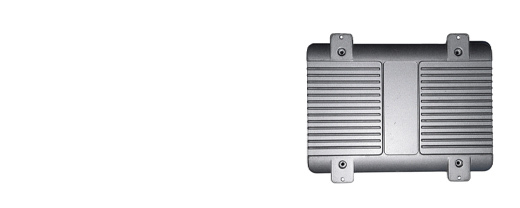
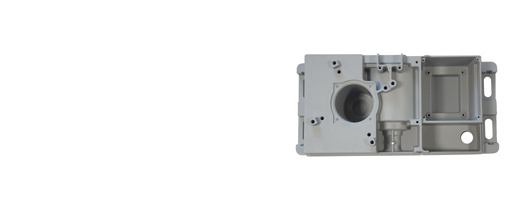
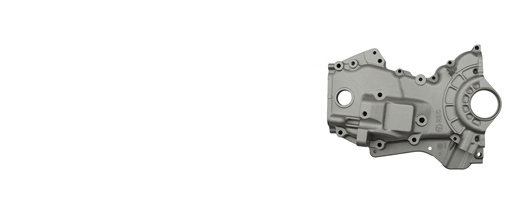
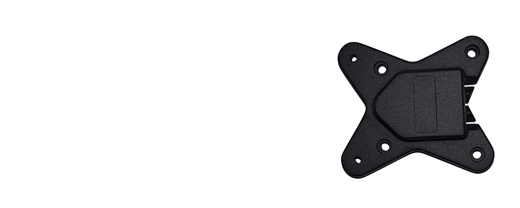
Nowadays, thin-wall aluminum die cast parts have been widely applied in high-end manufacturing fields. Typical applications include 1.0mm thin electronic equipment middle frames, 1.2mm thin new energy battery housing covers, ultra-thin communication shielding shells and lightweight automotive interior structural parts. These components rely on aluminum thin-wall die casting to realize lightweight design while retaining sufficient structural rigidity and corrosion resistance.
For product designers and purchasers, there are three core design suggestions for thin-wall die casting projects. First, avoid sudden wall thickness changes. Abrupt transition between thick ribs and thin walls will cause severe deformation and shrinkage holes; gradual transition structure is required. Second, set reasonable fillets for all sharp corners to improve molten metal flow and reduce stress concentration. Third, reserve reasonable machining allowance for key assembly surfaces, solving minor dimensional deviation caused by thin-wall deformation through simple post-polishing processing.
In conclusion, aluminum alloy die casting can stably produce high-quality thin-wall parts with professional alloy selection, mold optimization and process debugging. The mainstream stable limit wall thickness is 1.0mm, and ultra-optimized production can reach 0.8mm. As long as product design follows die casting process rules, thin-wall aluminum die cast parts can achieve high yield, stable dimension and perfect appearance without extra high production cost.
Related News
More >-
![Innovative Non-Toxic Cookware Revolutionizes Culinary Experience]()
Innovative Non-Toxic Cookware Revolutionizes Culinary Experience
In the dynamic culinary industry, manufacturers are responding to the demand for safe and efficient cookware. Aluminum die-cast and non-stick cookware, alongside BBQ accessories and Teflon pans, are at the forefront. The quest for the best nontoxic nonstick pan has led to revolutionary advancements. Our company leads this charge with premium nontoxic nonstick cookware, boasting durability, safety, and performance. From aluminum die-cast durability to superior non-stick coatings, our products redefine culinary excellence.
-
![How to Solve Shrinkage Porosity Issues Caused by Poor Mold Cooling Design?]()
How to Solve Shrinkage Porosity Issues Caused by Poor Mold Cooling Design?
Shrinkage porosity is one of the most common and destructive defects in aluminum alloy die casting production, mostly triggered by unreasonable mold cooling system design rather than raw material or operational errors. Unbalanced cooling leads to inconsistent solidification rates, residual shrinkage cavities and dispersed pores in thick-walled or hot spot areas, severely reducing product tightness, mechanical strength and yield rate. This article analyzes the internal formation mechanism of cooling-induced shrinkage porosity, summarizes typical cooling design flaws in traditional tooling, and proposes targeted optimization solutions including conformal cooling layout, thermal balance adjustment and process parameter matching. It also introduces professional simulation verification methods to help manufacturers eliminate porosity defects and stabilize casting quality fundamentally.
-
![How Long Is the Typical Lead Time for Custom Aluminum Die Cast Prototypes?]()
How Long Is the Typical Lead Time for Custom Aluminum Die Cast Prototypes?
Custom aluminum **die‑casting** prototype lead time depends heavily on part complexity, drawing stability, selected manufacturing route and post‑processing scope. Standard prototype‑**tooling** plus casting‑sample delivery normally takes 15‑25 working days, while CNC‑machined block samples and 3D‑printed metal samples offer much faster turnaround yet cannot fully replicate real die‑cast mechanical properties. Frequent drawing revisions, casting defects and subcontract‑process backlogs are major delay sources. Buyers should select suitable prototype solutions based on testing purposes, confirm clear timeline definitions, and provide finalized drawings to optimize schedules. Rational arrangement of **CNC** and surface‑treatment demands also helps control overall prototype cycle for cross‑border die‑casting projects.
-
![What is the minimum wall thickness for your die casting parts?]()
What is the minimum wall thickness for your die casting parts?
Minimum wall thickness for die‑casting parts is not a fixed figure. While laboratory‑level thin walls can be achieved, mass‑production needs to consider alloy fluidity, part size, melt flow distance, tooling accuracy and post‑processing such as CNC‑machining. Aluminum alloy commonly adopts 1.2‑1.5 mm as practical minimum wall thickness for stable volume output. Many customers make design pitfalls by copying sheet‑metal standards or ignoring flow distance and wall‑thickness mutation. Early‑stage DFM review with suppliers helps optimize wall‑thickness parameters before mold development. Balancing lightweight demand, filling performance and assembly reliability can reduce defects like mis‑runs and porosity, lower reject rate and avoid costly tooling modification in later project stages.
-
![How to control air bubble defects during die casting process?]()
How to control air bubble defects during die casting process?
Air bubble is a typical defect in die‑casting, caused by trapped cavity air, lubricant vapor and dissolved hydrogen in molten alloy, weakening mechanical performance and triggering failures during secondary machining. This article explains bubble formation mechanism, introduces optimization on tooling including gating system, overflow and vent design, tuning of injection profile and cycle time, molten alloy degassing and scrap management, plus on‑site inspection & preventive maintenance. Vent clogging and turbulent metal flow are major triggers. Mold‑flow simulation supports early‑stage improvement. Full zero‑bubble is not always economical; step‑by‑step troubleshooting and regular mold maintenance effectively reduce bubble reject rate for mass‑production die‑cast components.
-
![What is the lead time for new die casting tooling development?]()
What is the lead time for new die casting tooling development?
This article explains the full lead time range for custom die casting mold development under standard high-pressure die casting, and elaborates five key influencing dimensions. The total cycle varies from 25 to 60 working days, affected by mold manufacturing sequential stages, structural difficulty of aluminum die casting parts, precision standards and reserved CNC machining allowance. Unresolved batch die casting defects such as air holes and flash require repeated mold rectification and extend delivery periods heavily. Drawing revision delays also drag down the whole schedule. Manufacturers can shorten lead time via parallel processing, pre-confirmed technical specs and pre-simulation to reduce post-trial rework, helping buyers arrange reasonable project timelines with proper buffer days.
-
![What steel material do you select for standard die casting tooling?]()
What steel material do you select for standard die casting tooling?
Focused on steel selection standards for standard die casting tooling, this article analyzes five key dimensions: performance requirements for high-pressure die casting steel, mainstream hot-work steel grade comparison, how steel quality suppresses batch die casting defects, steel matching rules based on output and CNC machining allowance of aluminum die casting parts, and cost-service life trade-off for prototypes and mass-production die casting mold. Purified hot-work steel such as ESR H13 and 8407 effectively avoid thermal cracks and sticky aluminum flaws. Low-cost unpurified steel cuts initial tooling expense yet brings frequent rework and scrap loss. Hierarchical steel matching according to order volume balances upfront investment and long-term casting stability.
-
![What Are the Common Defects of Zinc Alloy Die Casting Parts?]()
What Are the Common Defects of Zinc Alloy Die Casting Parts?
This article introduces five common defects of zinc alloy die casting parts, including unique white rust corrosion, internal porosity and shrinkage cavity, surface cold shut, dimensional warpage, die sticking and burrs. Different from aluminum die castings, zinc die castings are more susceptible to white rust and die sticking due to active chemical properties and strong mold adhesion. Most defects result from improper die casting process, poor mold maintenance and incomplete anti-corrosion surface treatment. Targeted process optimization, regular mold upkeep and complete surface protection can effectively reduce defect rate and improve finished product quality of zinc alloy die castings.

Get the latest price? We'll respond as soon as possible(within 12 hours)