





Aluminum Die Castings and Die Casting Molds: Driving Precision, Efficiency and Innovation in Global Manufacturing
2026-03-31 15:30
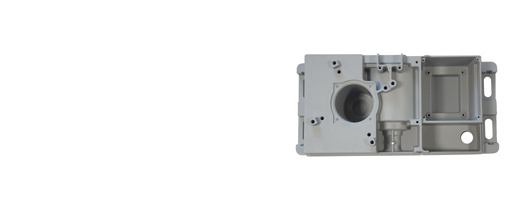
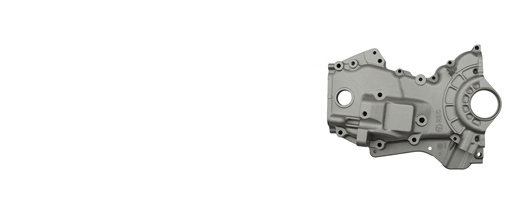
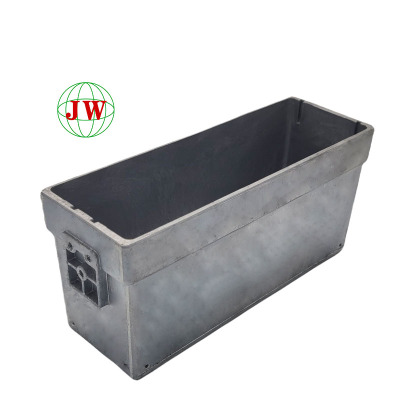
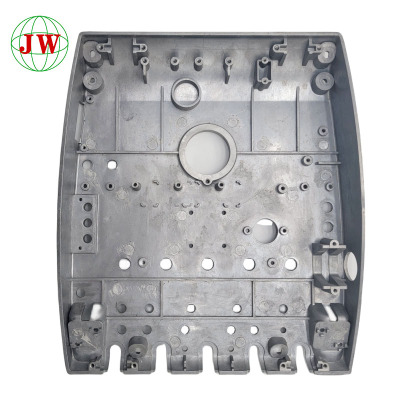
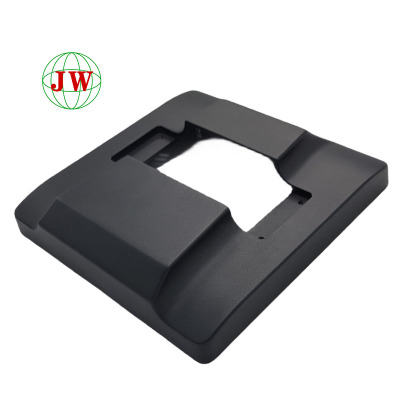
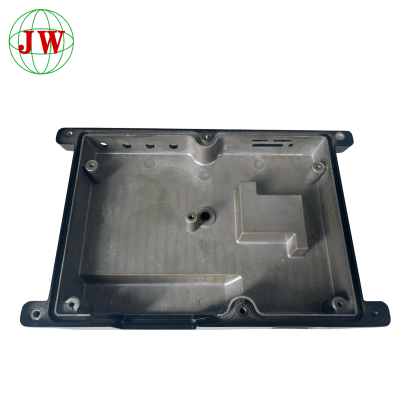
March 30, 2026 — As the backbone of modern manufacturing, aluminum die castings and die casting molds continue to evolve at a rapid pace, enabling the production of lightweight, high-strength components across automotive, electronics, industrial machinery and aerospace sectors. The global aluminum die casting market, valued at USD 25.6 billion in 2025, is projected to grow at a 5.7% CAGR through 2035, reaching USD 46.01 billion, fueled by electrification, lightweighting demands and technological advancements. This growth underscores the critical role of die casting as a cost-effective, high-volume production method for complex metal components.
At the core of this industry lies aluminum die casting, a process that injects molten aluminum alloys into precision-engineered die casting molds under extreme pressure, typically via High-Pressure Die Casting (HPDC). This method produces parts with exceptional dimensional accuracy, smooth surface finishes and thin-wall capabilities (as thin as 1.5–2.5 mm), minimizing post-processing and material waste. Key aluminum alloys like ADC12 and A380 dominate the field, offering a balance of castability, mechanical strength and corrosion resistance; ADC12 excels in fluidity for intricate designs, while A380 delivers superior tensile strength for heavy-duty applications. Recent alloy innovations, including nano-enhanced and heat-treated formulations, further expand performance boundaries, enabling components that meet stringent automotive and aerospace standards.
Die casting molds, the unsung heroes of the process, have undergone revolutionary advancements in design, materials and manufacturing. Modern molds are crafted from high-performance tool steels (such as H11 and H13) and heat-resistant alloys, engineered to withstand millions of casting cycles while maintaining precision. Cutting-edge technologies like conformal cooling channels—enabled by additive manufacturing and topology optimization—dramatically improve heat dissipation, reduce cycle times by up to 30% and minimize defects like porosity. Advanced surface treatments, including diamond-like carbon (DLC) and ceramic coatings, enhance mold release, reduce wear and extend service life, while 3D printing of mold inserts cuts development lead times by 60% compared to traditional machining. Digital tools like CAD/CAM simulation and thermal monitoring systems (e.g., Marposs’ Total Thermal Vision) optimize mold design in real time, ensuring consistent quality and reducing prototyping costs.
Process innovation is reshaping aluminum die casting efficiency and quality. Vacuum Die Casting is gaining traction, with a projected 8.93% CAGR through 2031, as it eliminates air entrapment and porosity, producing high-integrity components critical for electric vehicle (EV) structural parts and aerospace applications. Semi-solid rheocasting technology further refines microstructures, reducing shrinkage defects and enabling heat-treatable, weldable castings with superior mechanical properties. Automation and Industry 4.0 integration—including robotics, real-time data analytics and digital twins—have transformed production lines, boosting yield rates from 85% to over 96% and enabling predictive maintenance to minimize downtime. These advancements align with sustainability goals, as closed-loop recycling systems and low-emission melting technologies reduce carbon footprints and material waste.
The automotive sector, accounting for over 61% of die casting demand, is the primary driver of growth, particularly with the rise of EVs. Aluminum die castings are indispensable for lightweight EV components—including battery housings, inverter casings and structural chassis parts—where their strength-to-weight ratio improves range and reduces emissions. Gigacasting, using ultra-large presses (over 10,000 kN), revolutionizes vehicle manufacturing by consolidating multiple parts into single aluminum die castings, cutting assembly time and costs. In consumer electronics, aluminum die castings dominate heat sinks, 5G base station components and device casings, leveraging aluminum’s exceptional thermal conductivity and electromagnetic shielding properties. Industrial machinery and aerospace sectors rely on die casting for durable, precision parts, from pump housings to aircraft brackets, benefiting from the process’s scalability and cost-effectiveness.
Looking ahead, the future of aluminum die castings and die casting molds is defined by continuous innovation and expanding applications. AI-powered mold design and simulation will further optimize performance, while larger-scale additive manufacturing will enable production of massive die casting molds for next-generation gigacasting. The shift toward circular manufacturing will drive greater use of recycled aluminum, reducing environmental impact and costs. As electrification and smart manufacturing accelerate, aluminum die casting will remain a cornerstone technology, enabling industries to meet the demands of a lightweight, efficient and sustainable global economy. With die casting molds and processes evolving to match these needs, the industry is poised to maintain its pivotal role in shaping the future of manufacturing for decades to come.
Related News
More >-
![Innovative Non-Toxic Cookware Revolutionizes Culinary Experience]()
Innovative Non-Toxic Cookware Revolutionizes Culinary Experience
In the dynamic culinary industry, manufacturers are responding to the demand for safe and efficient cookware. Aluminum die-cast and non-stick cookware, alongside BBQ accessories and Teflon pans, are at the forefront. The quest for the best nontoxic nonstick pan has led to revolutionary advancements. Our company leads this charge with premium nontoxic nonstick cookware, boasting durability, safety, and performance. From aluminum die-cast durability to superior non-stick coatings, our products redefine culinary excellence.
-
![How to Solve Shrinkage Porosity Issues Caused by Poor Mold Cooling Design?]()
How to Solve Shrinkage Porosity Issues Caused by Poor Mold Cooling Design?
Shrinkage porosity is one of the most common and destructive defects in aluminum alloy die casting production, mostly triggered by unreasonable mold cooling system design rather than raw material or operational errors. Unbalanced cooling leads to inconsistent solidification rates, residual shrinkage cavities and dispersed pores in thick-walled or hot spot areas, severely reducing product tightness, mechanical strength and yield rate. This article analyzes the internal formation mechanism of cooling-induced shrinkage porosity, summarizes typical cooling design flaws in traditional tooling, and proposes targeted optimization solutions including conformal cooling layout, thermal balance adjustment and process parameter matching. It also introduces professional simulation verification methods to help manufacturers eliminate porosity defects and stabilize casting quality fundamentally.
-
![How Long Is the Typical Lead Time for Custom Aluminum Die Cast Prototypes?]()
How Long Is the Typical Lead Time for Custom Aluminum Die Cast Prototypes?
Custom aluminum **die‑casting** prototype lead time depends heavily on part complexity, drawing stability, selected manufacturing route and post‑processing scope. Standard prototype‑**tooling** plus casting‑sample delivery normally takes 15‑25 working days, while CNC‑machined block samples and 3D‑printed metal samples offer much faster turnaround yet cannot fully replicate real die‑cast mechanical properties. Frequent drawing revisions, casting defects and subcontract‑process backlogs are major delay sources. Buyers should select suitable prototype solutions based on testing purposes, confirm clear timeline definitions, and provide finalized drawings to optimize schedules. Rational arrangement of **CNC** and surface‑treatment demands also helps control overall prototype cycle for cross‑border die‑casting projects.
-
![What is the minimum wall thickness for your die casting parts?]()
What is the minimum wall thickness for your die casting parts?
Minimum wall thickness for die‑casting parts is not a fixed figure. While laboratory‑level thin walls can be achieved, mass‑production needs to consider alloy fluidity, part size, melt flow distance, tooling accuracy and post‑processing such as CNC‑machining. Aluminum alloy commonly adopts 1.2‑1.5 mm as practical minimum wall thickness for stable volume output. Many customers make design pitfalls by copying sheet‑metal standards or ignoring flow distance and wall‑thickness mutation. Early‑stage DFM review with suppliers helps optimize wall‑thickness parameters before mold development. Balancing lightweight demand, filling performance and assembly reliability can reduce defects like mis‑runs and porosity, lower reject rate and avoid costly tooling modification in later project stages.
-
![How to control air bubble defects during die casting process?]()
How to control air bubble defects during die casting process?
Air bubble is a typical defect in die‑casting, caused by trapped cavity air, lubricant vapor and dissolved hydrogen in molten alloy, weakening mechanical performance and triggering failures during secondary machining. This article explains bubble formation mechanism, introduces optimization on tooling including gating system, overflow and vent design, tuning of injection profile and cycle time, molten alloy degassing and scrap management, plus on‑site inspection & preventive maintenance. Vent clogging and turbulent metal flow are major triggers. Mold‑flow simulation supports early‑stage improvement. Full zero‑bubble is not always economical; step‑by‑step troubleshooting and regular mold maintenance effectively reduce bubble reject rate for mass‑production die‑cast components.
-
![What is the lead time for new die casting tooling development?]()
What is the lead time for new die casting tooling development?
This article explains the full lead time range for custom die casting mold development under standard high-pressure die casting, and elaborates five key influencing dimensions. The total cycle varies from 25 to 60 working days, affected by mold manufacturing sequential stages, structural difficulty of aluminum die casting parts, precision standards and reserved CNC machining allowance. Unresolved batch die casting defects such as air holes and flash require repeated mold rectification and extend delivery periods heavily. Drawing revision delays also drag down the whole schedule. Manufacturers can shorten lead time via parallel processing, pre-confirmed technical specs and pre-simulation to reduce post-trial rework, helping buyers arrange reasonable project timelines with proper buffer days.
-
![What steel material do you select for standard die casting tooling?]()
What steel material do you select for standard die casting tooling?
Focused on steel selection standards for standard die casting tooling, this article analyzes five key dimensions: performance requirements for high-pressure die casting steel, mainstream hot-work steel grade comparison, how steel quality suppresses batch die casting defects, steel matching rules based on output and CNC machining allowance of aluminum die casting parts, and cost-service life trade-off for prototypes and mass-production die casting mold. Purified hot-work steel such as ESR H13 and 8407 effectively avoid thermal cracks and sticky aluminum flaws. Low-cost unpurified steel cuts initial tooling expense yet brings frequent rework and scrap loss. Hierarchical steel matching according to order volume balances upfront investment and long-term casting stability.
-
![What Are the Common Defects of Zinc Alloy Die Casting Parts?]()
What Are the Common Defects of Zinc Alloy Die Casting Parts?
This article introduces five common defects of zinc alloy die casting parts, including unique white rust corrosion, internal porosity and shrinkage cavity, surface cold shut, dimensional warpage, die sticking and burrs. Different from aluminum die castings, zinc die castings are more susceptible to white rust and die sticking due to active chemical properties and strong mold adhesion. Most defects result from improper die casting process, poor mold maintenance and incomplete anti-corrosion surface treatment. Targeted process optimization, regular mold upkeep and complete surface protection can effectively reduce defect rate and improve finished product quality of zinc alloy die castings.

Get the latest price? We'll respond as soon as possible(within 12 hours)