





Press Release: Advanced Aluminum Die Casting Solution Cuts Porosity & Extends Mold Life for EV Components
2026-10-10 15:19
1. Industry Challenge: Defect Reduction & Tooling Cost Control
Global automotive and electronics manufacturers are facing growing pressure to deliver lightweight aluminum castings with tighter dimensional tolerances, while controlling rising tooling expenditure. Shrinkage porosity, internal voids and premature mold thermal fatigue remain the top pain points in high-pressure die casting (HPDC). Traditional mold designs often suffer uneven heat dissipation, leading to unstable part quality, high scrap rates and short mold service life, which drag down mass production efficiency and delay customer delivery schedules.
2. New Optimized Die Casting Technology Launched
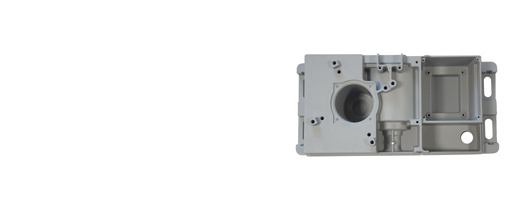
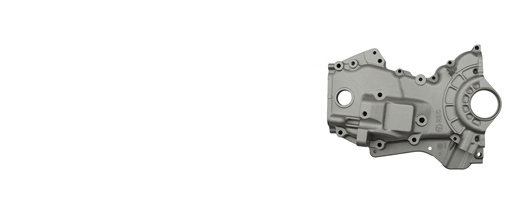
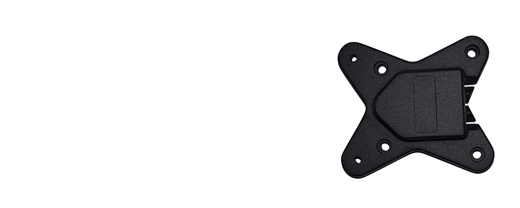
A southern China-based die casting manufacturer has rolled out a refined HPDC process combined with simulation-driven mold design, targeting aluminum alloy parts including A356 and ADC12 for new energy vehicle housings and electronic structural components. The team adopts MAGMA thermal-flow simulation in the early design phase to predict hot spots, optimize gating system and conformal cooling layout.
By adjusting pouring parameters, implementing closed-loop mold temperature control and upgrading surface PVD coating on mold inserts, the solution effectively mitigates shrinkage porosity and minimizes flash formation. The optimized thermal balance reduces cyclic thermal shock to the die steel.
3. Field Production Results
Mass production trials show remarkable improvements:
Internal porosity defect rate dropped significantly; X-ray inspection pass rate improved greatly
Mold service life increased by over 110%, cutting tool replacement frequency and downtime
Part dimensional consistency stabilized, less post-machining rework
Cycle time moderately shortened, supporting faster order fulfilment
All products comply with IATF16949 automotive quality standards and EU CBAM carbon reporting requirements, ready for export to European and North American OEM buyers.
4. Market Outlook for Lightweight Castings
The global demand for aluminum die cast EV components is projected to keep rising from 2026 to 2030. Automakers continue to pursue lightweight strategies to extend battery range. Integrated large die casting and precision thin-wall castings become mainstream trends. Suppliers with robust simulation capability, stable defect control and carbon compliance will gain stronger competitive advantages in cross-border trade.
5. Company Statement
“We focus on solving real production bottlenecks for global clients. Longer mold life, fewer internal defects and reliable lead time are what our overseas customers value most. We keep investing in process simulation and tooling surface treatment to balance quality, cost and sustainability,” said the sales director of the die casting enterprise. The firm plans to showcase its casting samples and mold technology at upcoming international metal exhibitions, and welcome technical audits from worldwide purchasers.
Related News
More >-
![Why Do Aluminum Casting Molds Generate Flash During Mass Production?]()
Why Do Aluminum Casting Molds Generate Flash During Mass Production?
This industry news analyzes why aluminum casting molds produce **flash** during mass **die‑casting** production. Flash is thin metal overflow caused by molten aluminum squeezing through mold gaps, bringing extra post‑processing work, material waste and component quality risks. Key root causes cover worn or deformed **tooling**, insufficient **clamping force**, improper injection parameters, high‑fluidity aluminum alloy and unreasonable part structural design. The article provides step‑by‑step troubleshooting workflow: checking machine status, tuning process parameters, repairing worn mold mating surfaces, applying DFM optimization and setting reasonable flash tolerance. Proper control reduces flash‑related rejects, stabilizes serial production and lowers comprehensive manufacturing cost for aluminum casting components.
-
![Is It Worth Repairing Old Die Cast Molds Instead of Making New Ones?]()
Is It Worth Repairing Old Die Cast Molds Instead of Making New Ones?
This article discusses whether repairing old **die‑casting** molds is worthwhile compared to manufacturing new **tooling**. Minor local wear such as gate erosion and shallow thermal cracks can be repaired economically with welding and **CNC machining**, offering shorter lead‑time for limited remaining production. However, structural deep cracks, repeated prior repairs and high‑volume mass‑production scenarios make repair risky. Repaired molds may suffer residual‑stress cracking, dimension drift and higher scrap caused by **porosity** or inconsistent **surface finishing**. Total cost must include hidden losses from scrap and downtime besides direct repair fees. Buyers should evaluate damage severity, order volume and timeline; partial insert rebuild provides a middle solution between full repair and completely new molds for stable long‑term manufacturing.
-
![What aluminum alloy grades do you use for die casting production?]()
What aluminum alloy grades do you use for die casting production?
Aluminum alloy grade selection is critical for die‑casting output, influencing castability, mechanical performance and surface treatment effect. Mainstream grades include ADC12, A360, A380 and YL102, each with distinct strengths and limitations. Project engineers should assess load requirements, service environment, CNC machining needs and cost before finalizing material. Cross‑border projects often face risks from inconsistent naming standards and post‑tooling alloy replacement, which may trigger mold modification and delays. Buyers should share real application scenarios, while suppliers need to clarify material trade‑offs and provide test reports. Proper alloy specification effectively reduces defects and stabilizes mass‑production quality.
-
![Industry News: Aluminum Die Casting Sector Faces Dual Challenges of Intelligent Upgrade & EU CBAM Compliance in 2026]()
Industry News: Aluminum Die Casting Sector Faces Dual Challenges of Intelligent Upgrade & EU CBAM Compliance in 2026
In 2026, the **aluminum die casting** industry grows steadily driven by lightweight automotive and furniture hardware demand. Integrated **aluminum alloy die castings** help reduce product weight and production costs, while manufacturers upgrade vacuum casting and recycled aluminum melting lines to cut carbon emissions. For exporters, EU CBAM imposes strict carbon rules on HS 7616 die casting goods. European clients qualify for a de-minimis exemption if yearly imports stay below 50 MT. Factories in Foshan prepare bilingual shipment records, HAWBs and stamped weight certificates as compliance proof. Surface finishing uses Nippon powder and cost-effective imitation Tiger powder. Going forward, intelligent production and full carbon traceability will become essential competitiveness for export-focused die casting manufacturers.
-
![How to Control Deformation of Thin-Wall Aluminum Die Casting Components]()
How to Control Deformation of Thin-Wall Aluminum Die Casting Components
This article focuses on dimensional deformation problems of precision thin-wall die casting parts, analyzing five core influencing factors and solutions. Unbalanced mold thermal balance and inconsistent solidification shrinkage cause asymmetric casting warpage, while rapid forming produces hidden residual stress leading to delayed deformation after CNC processing. Thin-wall structures with low rigidity are highly sensitive to cooling difference and ejection force. Systematic optimizations including conformal cooling, balanced gating design and stress relief treatment effectively stabilize flatness and dimensional tolerance, solving the most common batch deformation defects of high-precision aluminum die casting components.
-
![What Are the Most Common Defects in High-Pressure Aluminum Die Castings?]()
What Are the Most Common Defects in High-Pressure Aluminum Die Castings?
This article focuses on frequent flaws in high-pressure die casting aluminum components, covering five core dimensions: formation of pores and shrinkage cavities, surface defects caused by flawed die casting mold design, the dual influence of CNC machining allowance on flaw coverage, severe damage casting defects bring to post-process surface finishing, and full-chain improvement plans for qualified aluminum die casting parts. Internal voids cannot be removed by CNC cutting; residual surface flaws trigger coating bubbling, discoloration and batch scrap. Optimizing mold exhaust, cooling and injection parameters is the fundamental way to reduce defects instead of simply increasing machining allowance.
-
![Can you complete CNC machining after die casting forming?]()
Can you complete CNC machining after die casting forming?
This article discusses whether full CNC machining can be conducted after high-pressure die casting forming for custom aluminum die casting parts, and confirms the scheme is mature and widely applied in industrial manufacturing. It divides analysis into five sections, covering inherent casting defects of raw blanks, reasonable configuration standards of CNC machining allowance, standardized composite production workflows, how die casting mold structure influences CNC efficiency, and cost-quality comparison between one-step casting and casting-plus-machining modes. Unprocessed cast blanks fail precision assembly limits due to dimensional deviation and surface flaws; post CNC cutting removes flash, pores and uneven layers to reach micron tolerance. Optimized mold design and proper machining allowance control reduce production costs and scrap rates, making die casting matched with full CNC machining the mainstream solution for precision aluminum structural components.
-
![How much is the modification fee for existing die casting tooling?]()
How much is the modification fee for existing die casting tooling?
Centered on the inquiry of modification fees for existing die casting tooling, this article classifies mold revisions into free minor trimming, medium paid adjustment and heavy structural reconstruction, and elaborates five key pricing factors including mold cavity revision area, supplementary steel material, post-process matching, lead time and remaining mold shot life. It breaks down modification fees into steel, processing, trial and auxiliary cost modules for transparent quotation. Pre-production DFM analysis effectively reduces unnecessary revision work and related costs by optimizing product structures in advance. Multiple cost-saving strategies such as modular inserts and synchronous post-casting CNC machining coordination are introduced to cut clients’ revision expenditure. All charges follow standardized rules for aluminum alloy high-pressure die casting production projects, clearly distinguishing free factory liability rework and customer-borne design change fees.
Get the latest price? We'll respond as soon as possible(within 12 hours)