




Aluminum Mechanical Die-Cast Parts and Die Casting Molds: Empowering Precision and Efficiency in Industrial Machinery
2026-04-13 15:30
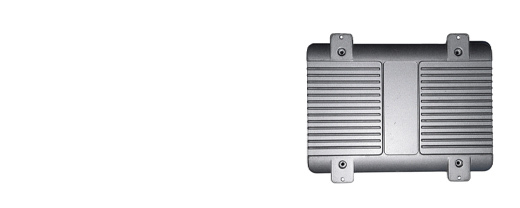
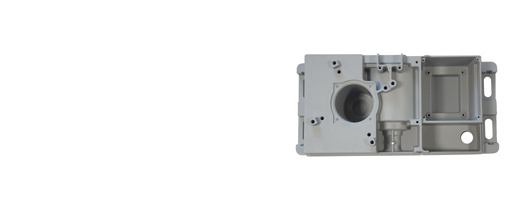
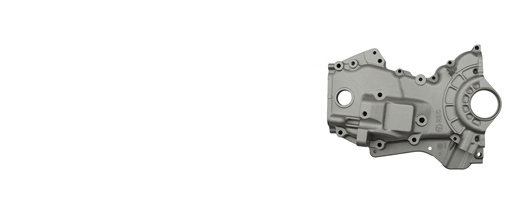
April 9, 2026 — The global industrial machinery sector is witnessing a paradigm shift toward precision, durability, and energy efficiency, withaluminum mechanical die-cast parts and die casting molds emerging as indispensable components. These elements underpin the performance of a wide array of industrial equipment, from gearboxes, pump housings, and valve bodies to sensor brackets, actuator components, and transmission casings. Aluminum die castings have become the preferred choice for mechanical manufacturers due to their unique combination of lightweight properties and high mechanical strength, while advanced die casting molds ensure the consistency and precision required for heavy-duty industrial applications. Backed by the global aluminum die casting market, which was valued at USD 80.16 billion in 2024 and is projected to reach USD 111.99 billion by 2030 with a CAGR of 5.8%, die casting technology is reshaping the future of mechanical manufacturing.
Aluminum die casting technology has revolutionized mechanical component production, addressing the industry’s core demands for strength, wear resistance, and dimensional accuracy. Unlike traditional materials such as steel or cast iron, aluminum die castings offer an exceptional strength-to-weight ratio—reducing equipment weight by up to 40% while maintaining tensile strengths of up to 310 MPa in high-pressure scenarios. This advantage not only enhances machinery maneuverability and energy efficiency but also reduces wear on moving parts, extending the overall service life of industrial equipment. The die casting process involves injecting molten aluminum alloys into precision-engineered die casting molds under high pressure (typically 4~500MPa), creating components with tight dimensional tolerances (as tight as ±0.02 mm) and complex geometries that are costly or impractical to achieve with machining or forging.
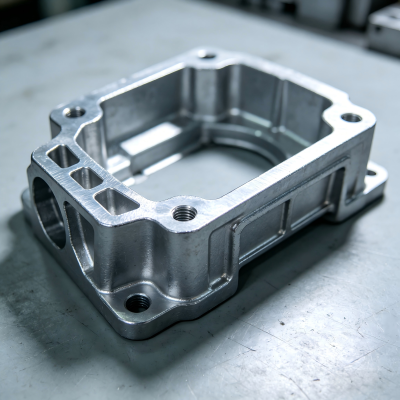
Key aluminum alloys tailored for aluminum mechanical die-cast parts are selected to withstand harsh industrial environments and meet rigorous performance standards. ADC12 alloy, a widely used aluminum-silicon formulation, is favored for its excellent fluidity during die casting, making it ideal for intricate components like gear housings and valve bodies that require minimal post-processing. A380 alloy, known for its balanced mechanical properties and corrosion resistance, is widely adopted for heavy-duty parts such as pump casings and transmission housings, ensuring durability in high-pressure and high-temperature operating conditions. Aluminum-copper alloys are used for specialized applications requiring superior strength and wear resistance, while aluminum-magnesium alloys excel in corrosive environments—all leveraging silicon’s ability to improve fluidity and reduce shrinkage.
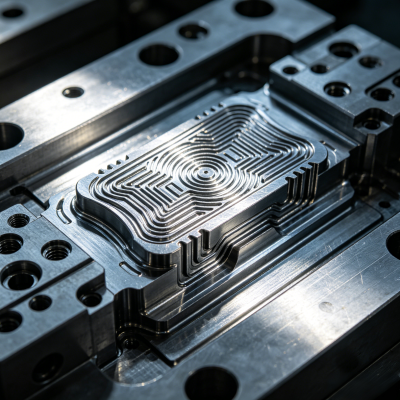
Die casting molds are the cornerstone of high-quality aluminum mechanical die-cast parts, with innovations in mold design and materials driving efficiency and precision. Mechanical components often feature complex internal structures, thin walls, and stringent tolerances—critical for seamless integration with other machinery parts—requiring die casting molds that deliver precise filling and cooling control. Modern molds are crafted from high-performance tool steels such as H13 and 718, engineered to withstand millions of casting cycles while maintaining accuracy under the high temperatures and pressures of the die casting process. Cutting-edge technologies like conformal cooling channels, enabled by 3D printing, optimize heat dissipation, reducing cycle times by up to 25% and minimizing defects like porosity—essential for airtight components such as pump housings and valve bodies.
Advanced die casting processes further elevate the quality and performance of aluminum mechanical parts. High-Pressure Die Casting (HPDC), which holds over 78% of the global production process market share, remains the most widely used method for mass-producing mechanical components, offering high efficiency and consistent quality for parts like gearboxes and sensor brackets. Vacuum Die Casting is gaining traction for high-precision applications, eliminating air entrapment to reduce porosity to less than 0.1% and improve mechanical properties—ideal for critical components like hydraulic valve bodies. Additionally, 3D printing of die casting mold inserts cuts development lead times by 60% compared to traditional machining, enabling manufacturers to quickly adapt to new equipment designs and custom component needs.
Sustainability and operational efficiency have become key drivers in the adoption of aluminum mechanical die-cast parts and die casting molds. Aluminum is 100% recyclable without losing its mechanical properties, and using recycled aluminum in die casting reduces energy consumption by up to 95% compared to virgin aluminum production—aligning with global carbon neutrality goals. Die casting processes also boast high material utilization rates (up to 98%), minimizing waste, while advanced surface treatments like anodizing and powder coating enhance corrosion and wear resistance for parts exposed to harsh industrial environments. The rise of smart manufacturing has further boosted demand, with sensor housings and automation components requiring lightweight, precise parts that die casting can efficiently produce.
Across mechanical equipment segments, aluminum mechanical die-cast parts and die casting molds play a pivotal role. Heavy machinery, including construction and agricultural equipment, relies on aluminum die castings for hydraulic pump housings and transmission casings, benefiting from their lightweight and high-strength properties. Precision machinery such as CNC machines and robotics leverages the dimensional accuracy of die cast parts to ensure smooth operation. Industrial pumps and valves depend on corrosion-resistant aluminum die castings to maintain airtightness, while die casting molds ensure consistent quality across high-volume production runs—supporting the industry’s need for reliable, cost-effective components that meet strict industrial standards.
Looking ahead, the future of aluminum mechanical die-cast parts and die casting molds is defined by continuous innovation. AI-powered die casting mold design and simulation tools will further optimize performance, reducing defects and lead times. The development of new high-strength, lightweight aluminum alloys and emerging die casting technologies like squeeze casting will push the boundaries of precision and durability, producing parts with near-forged strength. As the industrial machinery sector shifts toward automation, energy efficiency, and sustainability, aluminum die casting and die casting molds will remain indispensable, powering the next generation of high-performance equipment and solidifying their role as cornerstones of modern industrial manufacturing
Related News
More >-
![How to Balance Tooling Expense and Mass Production Cost for Custom Cast Parts?]()
How to Balance Tooling Expense and Mass Production Cost for Custom Cast Parts?
Custom cast parts projects face inherent trade‑offs between one‑time tooling investment and recurring mass‑production cost in die‑casting industry. Many stakeholders only compare initial die quotations while ignoring full‑lifecycle risks including high scrap rate, frequent die maintenance and extra secondary machining. This article analyses five practical dimensions: core amortization cost logic, early‑stage DFM optimization, volume‑oriented selection of tool‑steel and cavity quantity, process tuning to shorten cycle time and improve gating system performance, plus flexible commercial cooperation modes. It points out that cheap tooling often creates hidden mass‑production losses. Rational decisions require evaluating total‑cost‑of‑ownership rather than one‑time expenditure, matching tool specification with real output volume, so manufacturers and purchasers obtain balanced quality and economic benefits for custom cast components.
-
![What surface treatment do you apply on die casting tooling cavity?]()
What surface treatment do you apply on die casting tooling cavity?
Centered on cavity surface treatment solutions for die casting mold under high-pressure die casting, this article elaborates five key sections: severe cavity working environment, four mainstream protective coating technologies, how coatings eliminate batch die casting defects, matching rules based on output and CNC machining allowance of aluminum die casting parts, plus cost and service life comparison of each finish. Plasma nitriding serves as basic low-cost treatment, while TD coating offers top anti-adhesion performance for long-run mass production. PVD suits high-gloss appearance castings. Skipping cavity coating reduces upfront tooling expense yet triggers persistent blank flaws and extra post-processing cost.
-
![What tolerance can you guarantee on die casting threaded inserts?]()
What tolerance can you guarantee on die casting threaded inserts?
This article answers the core question about guaranteed tolerance of die casting threaded insert, dividing tolerance into commercial, precision and ultra-precision three grades adapted to diverse assembly scenarios. It analyzes molten aluminum temperature, insert placement and mold wear as main tolerance influencing factors in high-pressure die casting process. Optimized positioning and cooling structure of die casting tooling stabilize regular insert tolerance effectively. Pre-production DFM analysis avoids structural tolerance risks by checking wall thickness, insert spacing and assembly demands. For ultra-tight tolerance beyond pure die casting capability, post-casting CNC machining including thread tapping and position reaming is adopted to upgrade precision. The factory provides clear hierarchical tolerance standards, full quality inspection and pre-sample confirmation to match global buyer’s hardware assembly and plating production needs.
-
![What is the difference between zinc and aluminum die casting parts?]()
What is the difference between zinc and aluminum die casting parts?
There are comprehensive differences between zinc and aluminum die cast parts. Zinc alloy has a lower melting point, better fluidity and lower mold loss, ideal for delicate decorative hardware and low-load movable parts, but it is prone to creep deformation under long-term load. Aluminum alloy is lighter, with higher structural strength and better natural corrosion resistance, making it suitable for load-bearing components and outdoor products. Zinc castings match well with electroplating, while aluminum ones adapt better to spraying and anodizing. Material selection should be based on product weight, load, service environment, appearance needs and production budget.
-
![What is the Difference Between Aluminum Die Casting and Sand Casting?]()
What is the Difference Between Aluminum Die Casting and Sand Casting?
This article compares aluminum high-pressure die casting and sand casting from five core aspects. Die casting uses reusable metal molds with high pressure filling, featuring high dimensional accuracy, smooth surface, high production efficiency and dense internal structure. It fits large-batch, high-precision lightweight industrial parts with low unit cost for mass orders. Sand casting applies disposable sand molds and gravity filling, with low upfront cost but poor precision, rough surface and low efficiency. It suits small-batch prototypes and oversized aluminum components. Manufacturers shall select proper casting processes according to order volume, precision demands and actual application scenarios.
-
![What is Aluminum Alloy Die Casting Used for?]()
What is Aluminum Alloy Die Casting Used for?
This passage mainly introduces the wide application fields of aluminum alloy die casting. Combined with five core keywords including high-pressure die casting and die casting mold, it sorts out its practical uses in automobile, home appliances, new energy, electronic communication and industrial hardware. With stable mechanical performance, excellent heat dissipation and reliable corrosion resistance, die-cast aluminum parts can form complex structures efficiently. Various surface treatments further improve product quality. It features low comprehensive cost and large-scale production capacity, becoming a mainstream processing choice for various industries worldwide.
-
![Medical Equipment Aluminum Die-Castings: High-Cleanliness Components for Medical Devices]()
Medical Equipment Aluminum Die-Castings: High-Cleanliness Components for Medical Devices
The progress of medical technology requires safe, clean and precise equipment components. Medical equipment aluminum die-castings and medical precision die-cast molds are widely used in medical instruments and diagnostic equipment. Supported by professional medical die-casting tooling and mature medical die-casting craftsmanship, our medical aluminum die-cast components have high cleanliness, corrosion resistance and easy disinfection. Strict quality control meets medical industry standards. We provide customized and bulk production services, and welcome medical device enterprises to contact us for cooperation.
-
![Aluminum Die-Casting Solutions for Energy Storage & New Energy Equipment]()
Aluminum Die-Casting Solutions for Energy Storage & New Energy Equipment
The rapid development of energy storage and new energy industries requires safer and more reliable structural components. Our energy storage aluminum die-cast housings and new energy structural die-castings are widely used in battery systems, inverters, and power equipment. Supported by professional custom energy die-casting molds and advanced integrated die-casting technology, these products feature high strength, good thermal conductivity, and strong durability. Strict quality control ensures compliance with electrical safety standards. We provide customized design and mass production for aluminum die-cast enclosures for energy equipment, and welcome partners in the new energy sector to establish long-term cooperation.
Get the latest price? We'll respond as soon as possible(within 12 hours)