






What surface treatment do you apply on die casting tooling cavity?
2026-07-03 15:30
Mold engineers and procurement specialists engaged in new energy vehicle, automation and communication hardware manufacturing frequently raise a critical technical question: What surface treatment do you apply on die casting tooling cavity? The cavity surface directly contacts over 660°C molten aluminum alloy under high injection pressure during long-run high-pressure die casting. Untreated bare hot-work steel suffers severe thermal fatigue, aluminum adhesion, erosion and scratch damage after thousands of shots, which creates persistent burrs, flow lines and pits on aluminum die casting parts. These typical die casting defects force factories to reserve thicker CNC machining allowancefor secondary removal and trigger frequent mold shutdown maintenance. This article systematically introduces mainstream industrial cavity surface treatments for standard die casting mold, analyzes their functional advantages, applicable scenarios, defect suppression effects and cost differences, providing clear reference for mold development specification confirmation.
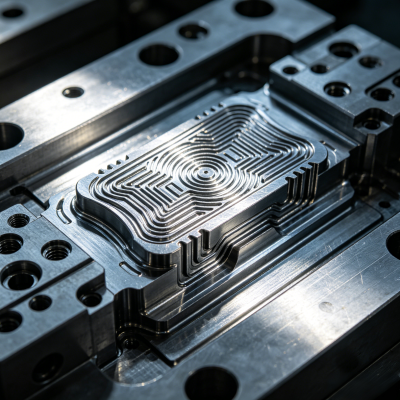
1. Harsh Working Conditions of Cavity Surfaces in Continuous high-pressure die casting Production
The cavity core of a die casting mold bears alternating extreme thermal and mechanical loads that ordinary metal surface protection cannot withstand. In each full casting cycle, molten aluminum alloy rushes into the mold cavity at high speed, creating strong chemical adhesion and scouring friction on steel surfaces. Immediately after filling, circulating cooling water rapidly cools the mold to demolding temperature, forming violent thermal expansion and contraction stress on the cavity layer. Repeating this process tens of thousands of times gradually damages bare steel surfaces.
Without professional cavity surface treatment, four major aging problems will emerge in short order. First, aluminum sticking: molten aluminum alloys chemically bond with exposed steel, forming uneven metal buildup on cavity walls. Every produced blank carries raised aluminum bumps, requiring extra thick CNC machining allowance to mill flat; insufficient reserved cutting thickness leaves residual bumps and ruins subsequent powder coating or anodizing. Second, thermal crack propagation: cyclic hot-cold shock generates micro cracks on bare steel surfaces. Molten liquid penetrates crack gaps and leaves obvious linear marks on all aluminum die casting parts, a fatal die casting defect that cannot be eliminated by post processing.
Third, cavity erosion and wear: long-term high-speed aluminum scouring wears down thin-wall rib positions and gate areas, causing permanent dimensional deviation of cast blanks. The mold parting gap expands continuously, producing thick flash that raises trimming labor costs sharply. Fourth, uneven demolding traces: uncoated steel has inconsistent release agent adhesion, leading to spotty dark flow lines on visible surfaces of premium cast components, downgrading finished appearance quality.
Standard hot-work steel such as SKD61 and ESR H13 only provides basic structural strength; targeted surface coating treatment is mandatory to isolate high-temperature aluminum liquid and slow down thermal fatigue aging for stable mass production of high-pressure die casting.
2. Mainstream Surface Treatment Technologies for Standard die casting moldCavities & Cores
Four mature surface treatment processes dominate commercial die casting cavity protection: nitriding, TD coating, PVD coating and chromium plating. Each technology forms a distinct protective film with unique hardness, anti-sticking capacity and heat resistance for different production demands of aluminum die casting parts.
Plasma nitriding is the most widely adopted basic cavity treatment for medium-volume general molds. A dense nitrogen hardening layer with 0.1–0.3mm thickness is formed on steel surface, raising surface hardness to 800–1000 HV. The hard layer greatly improves wear resistance and slightly reduces aluminum adhesion. Nitriding features low processing cost and short turnaround time, perfectly matching ordinary electronic shell molds with annual output below 150,000 shots. It serves as the standard surface finish for mass-produced die casting mold without ultra-high appearance requirements.
TD coating (Thermal Diffusion Coating) forms an ultra-hard vanadium carbide film on cavity surfaces. Its hardness exceeds 3000 HV, delivering top-tier anti-scouring and anti-aluminum-sticking performance. TD coating completely solves sticky aluminum issues on thick-wall automotive structural castings under long continuous high-pressure die casting. The protective film is tightly combined with the steel substrate without peeling, extending mold service life by over 100%. Its only drawback is relatively high processing expense and longer treatment cycle.
PVD hard coating including TiN, TiCN and AlTiN is popular for high-gloss appearance cavity cores. The thin, smooth film maintains ultra-fine polishing texture of mold surfaces without losing mirror finish. It is ideal for medical instruments and sensor housings requiring flawless blank surfaces, which help reduce preset CNC machining allowance to cut secondary processing cost. PVD coating is not recommended for heavy scouring gate positions due to thin film thickness.
Hard chromium plating creates a smooth isolation layer to prevent aluminum bonding, often applied on simple low-output prototype molds. However, the chromium layer bears weak thermal shock resistance; it peels off easily after frequent hot-cold cycles and is seldom used for formal mass production die casting mold.
Mold bases, ejector plates and non-cavity structural components do not touch molten aluminum, so extra surface treatment is unnecessary to save manufacturing costs. Only core, cavity, slide and insert surfaces require dedicated coating procedures.
3. How Cavity Surface Coatings Effectively Reduce Recurring die casting defects on Cast Blanks
High-performance cavity surface treatments act as a critical barrier to block multiple common die casting defects generated during high-pressure die casting, cutting scrap rate and secondary processing workload simultaneously.
First, anti-adhesion coating eliminates aluminum sticking defects. TD and deep nitriding layers isolate chemical reaction between steel and molten aluminum, removing irregular metal bumps on aluminum die casting parts. Factories no longer need to reserve excessive CNC machining allowance for bump removal, lowering CNC machine hours and tool consumption costs. Without sticky aluminum buildup, mold surface stays smooth for tens of thousands of shots, avoiding periodic mold disassembly for manual polishing cleaning.
Second, hard protective films slow thermal crack generation drastically. Nitride and carbide layers disperse surface thermal stress evenly, delaying micro crack formation under cyclic temperature changes. Linear crack marks on casting blanks are largely suppressed, eliminating batch scrap caused by deep penetrating flaw lines that cannot be removed via cutting.
Third, uniform coating layer stabilizes mold dimensional consistency and minimizes flash defects. The wear-resistant film prevents gate and rib position erosion; mold fitting gaps remain consistent long-term, reducing flash overflow along parting lines. Less flash means shorter trimming procedures and cleaner blank surfaces before surface finishing.
Fourth, smooth coated surfaces optimize demolding uniformity. Release agent distributes evenly on treated cavities, avoiding patchy cold shut lines and dark flow traces on appearance surfaces of finished castings. This advantage is vital for premium components directly used after bead blasting and clear coating without heavy CNC milling.
Molds without cavity surface treatment inevitably face periodic surges of defective blanks. Although coating adds a one-time processing fee during mold development, the long-term savings from reduced scrap, fewer mold maintenance stops and lighter CNC machining allowance workload far offset initial investment.
4. Matching Cavity Surface Treatment Based on Output, Alloy & Preset CNC machining allowance
Mold designers select targeted cavity surface treatment by evaluating three core parameters: total casting output, aluminum alloy type and customer-specified CNC machining allowance of finished aluminum die casting parts.
For prototype molds with total shots under 50,000 and thick single-side machining allowance over 0.8mm, basic plasma nitriding fully meets production needs. The limited service cycle will not reach the wear limit of nitride layers, balancing coating cost and basic defect control.
Medium mass orders of 50,000–200,000 shots producing ADC12, A380 general aluminum alloy housings adopt deep plasma nitriding as standard configuration. Stable anti-wear performance controls sticky aluminum and flash within acceptable limits, allowing customers to lower machining allowance to 0.4–0.6mm for cost-effective post-processing.
Large thick-wall new energy vehicle structural castings with annual output over 200,000 shots require TD coating. Heavy molten aluminum scouring and long high-temperature contact demand ultra-hard vanadium carbide protection to prevent severe erosion and adhesion. Even with thin reserved CNC machining allowance, blank surfaces remain clean without stubborn defects.
High-end appearance castings with Class A mirror requirements and minimal cutting allowance below 0.3mm choose PVD coating. The ultra-smooth thin film retains cavity polishing texture, delivering flawless as-cast surfaces and reducing extra fine CNC finishing steps.
For special high-silicon aluminum alloys with strong adhesion tendency, TD coating becomes mandatory regardless of output volume, as bare or nitrided cavities generate severe sticky aluminum die casting defects after short production runs.
5. Cost, Service Life & Maintenance Comparison of Different Cavity Surface Finishes
Many buyers only compare upfront mold manufacturing costs while ignoring the service life gap brought by different cavity treatments, leading to higher comprehensive loss in long-term high-pressure die casting mass production.
Plasma nitriding carries the lowest coating cost, raising total die casting moldquotation by only 6%–12%. It supports around 80,000 stable shots before obvious wear appears, suitable for short-cycle prototype and small-batch projects. After reaching the shot limit, molds need repeated polishing and re-nitriding every few months, bringing regular production downtime.
PVD coating has medium processing cost and outstanding surface smoothness, ideal for low-scour appearance cavities with 100,000–150,000 available shots. Its main limitation is weak resistance against strong molten metal impact, so it cannot be used on gate and runner core areas.
TD coating delivers the longest service life, doubling the effective production cycle of nitrided molds to over 200,000 shots. Although coating expenses increase mold cost by 20%–30%, maintenance frequency drops by more than 70%, and batch die casting defects are well controlled. Stable long-run factories with repeat bulk orders gain the most obvious comprehensive cost advantages from TD treatment.
Hard chromium plating features low price but poor thermal fatigue resistance, mostly phased out from formal mass production tooling due to frequent film peeling and rework.
A practical cost-performance principle for purchasers: apply nitriding for trial molds and small orders; upgrade to TD coating for long-term mass structural parts; select PVD coating exclusively for high-gloss appearance aluminum die casting parts with thin CNC machining allowance. This hierarchical matching strategy balances initial mold investment and long-term production stability.
Article Conclusion
To answer the core question of the headline: factories apply four mainstream cavity surface treatments for standard die casting mold, including plasma nitriding, TD coating, PVD hard coating and hard chromium plating, to resist harsh thermal and mechanical loads in high-pressure die casting.
Each coating suppresses common die casting defects such as aluminum sticking, thermal cracks and flash, and the specific process is matched according to casting output, alloy material and preset CNC machining allowance of target aluminum die casting parts. Low-cost basic nitriding fits small-batch production, while TD coating provides ultra-long service life for mass automotive components. Blindly skipping cavity surface treatment cuts one-time mold cost but leads to continuous blank scrap, frequent mold overhaul and heavier secondary CNC processing workload, raising overall long-term production expenditure significantly.
Related News
More >-
![How to Balance Tooling Expense and Mass Production Cost for Custom Cast Parts?]()
How to Balance Tooling Expense and Mass Production Cost for Custom Cast Parts?
Custom cast parts projects face inherent trade‑offs between one‑time tooling investment and recurring mass‑production cost in die‑casting industry. Many stakeholders only compare initial die quotations while ignoring full‑lifecycle risks including high scrap rate, frequent die maintenance and extra secondary machining. This article analyses five practical dimensions: core amortization cost logic, early‑stage DFM optimization, volume‑oriented selection of tool‑steel and cavity quantity, process tuning to shorten cycle time and improve gating system performance, plus flexible commercial cooperation modes. It points out that cheap tooling often creates hidden mass‑production losses. Rational decisions require evaluating total‑cost‑of‑ownership rather than one‑time expenditure, matching tool specification with real output volume, so manufacturers and purchasers obtain balanced quality and economic benefits for custom cast components.
-
![What tolerance can you guarantee on die casting threaded inserts?]()
What tolerance can you guarantee on die casting threaded inserts?
This article answers the core question about guaranteed tolerance of die casting threaded insert, dividing tolerance into commercial, precision and ultra-precision three grades adapted to diverse assembly scenarios. It analyzes molten aluminum temperature, insert placement and mold wear as main tolerance influencing factors in high-pressure die casting process. Optimized positioning and cooling structure of die casting tooling stabilize regular insert tolerance effectively. Pre-production DFM analysis avoids structural tolerance risks by checking wall thickness, insert spacing and assembly demands. For ultra-tight tolerance beyond pure die casting capability, post-casting CNC machining including thread tapping and position reaming is adopted to upgrade precision. The factory provides clear hierarchical tolerance standards, full quality inspection and pre-sample confirmation to match global buyer’s hardware assembly and plating production needs.
-
![What is the difference between zinc and aluminum die casting parts?]()
What is the difference between zinc and aluminum die casting parts?
There are comprehensive differences between zinc and aluminum die cast parts. Zinc alloy has a lower melting point, better fluidity and lower mold loss, ideal for delicate decorative hardware and low-load movable parts, but it is prone to creep deformation under long-term load. Aluminum alloy is lighter, with higher structural strength and better natural corrosion resistance, making it suitable for load-bearing components and outdoor products. Zinc castings match well with electroplating, while aluminum ones adapt better to spraying and anodizing. Material selection should be based on product weight, load, service environment, appearance needs and production budget.
-
![What is the Difference Between Aluminum Die Casting and Sand Casting?]()
What is the Difference Between Aluminum Die Casting and Sand Casting?
This article compares aluminum high-pressure die casting and sand casting from five core aspects. Die casting uses reusable metal molds with high pressure filling, featuring high dimensional accuracy, smooth surface, high production efficiency and dense internal structure. It fits large-batch, high-precision lightweight industrial parts with low unit cost for mass orders. Sand casting applies disposable sand molds and gravity filling, with low upfront cost but poor precision, rough surface and low efficiency. It suits small-batch prototypes and oversized aluminum components. Manufacturers shall select proper casting processes according to order volume, precision demands and actual application scenarios.
-
![What is Aluminum Alloy Die Casting Used for?]()
What is Aluminum Alloy Die Casting Used for?
This passage mainly introduces the wide application fields of aluminum alloy die casting. Combined with five core keywords including high-pressure die casting and die casting mold, it sorts out its practical uses in automobile, home appliances, new energy, electronic communication and industrial hardware. With stable mechanical performance, excellent heat dissipation and reliable corrosion resistance, die-cast aluminum parts can form complex structures efficiently. Various surface treatments further improve product quality. It features low comprehensive cost and large-scale production capacity, becoming a mainstream processing choice for various industries worldwide.
-
![Medical Equipment Aluminum Die-Castings: High-Cleanliness Components for Medical Devices]()
Medical Equipment Aluminum Die-Castings: High-Cleanliness Components for Medical Devices
The progress of medical technology requires safe, clean and precise equipment components. Medical equipment aluminum die-castings and medical precision die-cast molds are widely used in medical instruments and diagnostic equipment. Supported by professional medical die-casting tooling and mature medical die-casting craftsmanship, our medical aluminum die-cast components have high cleanliness, corrosion resistance and easy disinfection. Strict quality control meets medical industry standards. We provide customized and bulk production services, and welcome medical device enterprises to contact us for cooperation.
-
![Aluminum Die-Casting Solutions for Energy Storage & New Energy Equipment]()
Aluminum Die-Casting Solutions for Energy Storage & New Energy Equipment
The rapid development of energy storage and new energy industries requires safer and more reliable structural components. Our energy storage aluminum die-cast housings and new energy structural die-castings are widely used in battery systems, inverters, and power equipment. Supported by professional custom energy die-casting molds and advanced integrated die-casting technology, these products feature high strength, good thermal conductivity, and strong durability. Strict quality control ensures compliance with electrical safety standards. We provide customized design and mass production for aluminum die-cast enclosures for energy equipment, and welcome partners in the new energy sector to establish long-term cooperation.
-
![Advanced Automotive Alloy Die-Castings and Precision Tooling for Auto Industry]()
Advanced Automotive Alloy Die-Castings and Precision Tooling for Auto Industry
The global automotive industry is moving towards electrification and lightweight, and automotive die-cast aluminum molds and auto aluminum die-cast components have become core supporting parts. Relying on professional auto die-casting tooling and mature automotive die-casting processing technology, our products feature high precision, light weight and strong durability, widely used in automotive powertrain, chassis and other systems. Strict quality control ensures stable product performance, meeting the strict requirements of the automotive industry. We provide customized and bulk production services for automotive die-cast parts, and welcome auto parts manufacturers to contact us for in-depth cooperation.
Get the latest price? We'll respond as soon as possible(within 12 hours)