
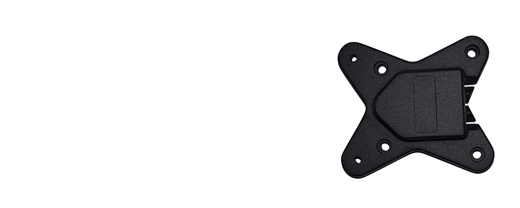



What Are the Common Defects of Zinc Alloy Die Casting Parts?
2026-06-04 15:30
Zinc alloy high-pressure die casting is a mainstream precision metal forming process widely used in hardware accessories, electronic structural parts, automotive small components and decorative hardware. Compared with aluminum alloy die casting, zinc alloy die casting parts feature lower melting temperature, better fluidity, higher dimensional accuracy and superior surface finish, making them suitable for thin-wall and intricate precision parts. However, affected by zinc alloy material characteristics, mold design, die casting process parameters and post-treatment operation, various typical defects frequently occur during mass production. These defects damage appearance effect, structural strength and anti-corrosion performance of finished products. This article elaborates five most frequent defects of zinc die castings, including causes, hazard impacts and targeted prevention solutions respectively.
1. Oxidation and White Rust: Unique Corrosion Defects for Zinc Die Castings
Oxidation and white rust are the most distinctive defects exclusive to zinc alloy die casting parts, rarely appearing on aluminum die castings. White rust refers to white powdery corrosion spots generated on the part surface after long-term exposure to humid air, rainy environment or coastal salt spray conditions. Zinc alloy has active chemical properties, and it is easy to react with water vapor and oxygen in the air to produce zinc hydroxide and zinc carbonate attachments, forming obvious white rust stains. In severe cases, white rust will further evolve into red rust, causing permanent surface damage and scrapping decorative parts directly.
Three core factors lead to white rust defects. Firstly, residual moisture inside raw zinc ingots and molten zinc will increase internal hydrogen content, accelerating surface electrochemical corrosion. Secondly, incomplete cleaning after die casting leaves residual release agent and cutting fluid on part surface, destroying the original passive protective film. Thirdly, unqualified or incomplete surface treatment is the main inducement. If electroplating, passivation or chromate sealing layers are too thin or have cracks, external moisture will penetrate the coating and erode the zinc substrate rapidly.
Effective preventive measures include full degassing and drying of zinc liquid before production, complete ultrasonic cleaning before surface treatment, and adopting double-layer passivation sealing process. For outdoor-used zinc die castings, thick nickel electroplating layer can completely isolate air and moisture, fundamentally solving white rust corrosion problems and extending service life by more than 3 times.
2. Shrinkage Cavity and Porosity: Internal Structural Hidden Defects
Similar to aluminum die castings, porosity and shrinkage cavity are also common internal defects for zinc alloy die castings, but they have different formation mechanisms. Zinc alloy has larger solidification shrinkage rate than aluminum alloy. During rapid cooling after high-pressure filling, molten zinc shrinks sharply in a short time. Without sufficient feeding pressure, irregular shrinkage holes will form at thick material positions, rib roots and hot joints of parts. Gas porosity is mainly caused by trapped air in mold cavity and gas decomposed from release agent.
The hazards of internal defects are obvious. Tiny internal pores will reduce part compactness and structural toughness. Unlike aluminum parts, zinc alloy parts are more prone to fracture under slight impact due to internal hidden holes. For threaded columns and assembly structural surfaces, internal porosity will cause thread sliding and assembly failure. Besides, pores will destroy the uniformity of subsequent electroplating coating, leading to blistering and peeling of electroplated layers in later use.
Optimization solutions are formulated from process and mold aspects. Manufacturers appropriately increase holding pressure and extend pressure holding time to compensate solidification shrinkage of zinc liquid. Optimize mold exhaust grooves and add vacuum exhaust system to discharge trapped air thoroughly. Meanwhile, avoid excessive local thick wall design in product development to reduce concentrated shrinkage risks. Strict molten zinc degassing treatment can control internal pore rate below 1% for qualified zinc die castings.
3. Cold Shut and Flow Lines: Surface Appearance Defects
Cold shut and flow lines are intuitive surface appearance defects affecting the decoration performance of zinc alloy die casting parts. Zinc alloy has excellent fluidity, but unreasonable process parameters will still cause poor metal fusion. Cold shut presents visible linear welding lines on part surface, formed when two streams of molten zinc meet but cannot fuse completely. Flow lines are wavy uneven textures left on the surface after molten zinc flows and cools down, which cannot be removed by simple polishing.
Different from aluminum die castings, zinc die castings have lower melting point, so low mold temperature is the primary cause of cold shut defects. If the mold preheating temperature is lower than 180℃, molten zinc will cool down instantly after touching the mold cavity surface, resulting in poor fluidity and incomplete fusion. In addition, unreasonable gate position leads to overlong molten metal filling path, and insufficient injection speed aggravates surface flow marks. These appearance defects will lead to uneven electroplating color and poor surface gloss, failing high-standard appearance inspection requirements.
Targeted improvements include raising mold preheating temperature to 200℃-240℃ stably, optimizing runner and gate structure to shorten filling distance, and matching medium and high injection speed suitable for zinc alloy characteristics. Compared with aluminum parts, zinc die castings can eliminate cold shut defects more easily by adjusting mold temperature, thanks to its superior metal fluidity.
4. Warpage and Deformation: Dimensional Out-of-Tolerance Defects
Warpage and dimensional deformation are frequent problems for thin-wall zinc alloy die casting parts. Zinc alloy has larger thermal expansion coefficient than aluminum alloy, bringing more obvious residual internal stress after mold ejection. Uneven cooling speed between thin walls and thick ribs causes inconsistent stress release, resulting in part bending, twisting and size deviation. This defect is especially prominent in large thin-wall zinc decorative shells and long strip hardware parts.
The main inducing reasons cover three aspects. First, unbalanced mold cooling water channel layout causes uneven mold surface temperature, forming differential cooling stress. Second, unreasonable ejection pin layout leads to unbalanced ejection force, forcing parts to deform during demolding. Third, improper part structure with too thin wall thickness and lack of reinforcing ribs reduces overall rigidity. Slightly deformed parts cannot match assembly dimensions, while severely deformed parts can only be scrapped directly.
Common improvement methods include optimizing cooling pipeline to realize synchronous cooling of the whole mold, adjusting ejection pin quantity and distribution to ensure uniform demolding force, and adding reasonable reinforcing ribs to improve part rigidity. Besides, manufacturers adopt fixture shaping and natural stress relief after part ejection to reduce residual internal stress effectively, ensuring dimensional tolerance meets drawing requirements stably.
5. Die Sticking and Burrs: Mold Matching Surface Defects
Die sticking and burrs are surface defects closely related to mold maintenance and mold clamping precision. Zinc alloy has strong adhesion to steel mold cavities, so die sticking happens more easily than aluminum die castings. Die sticking means partial zinc material adheres to mold cavity surface, causing surface scratches, material shortage and rough surface on finished parts. Long-term die sticking will also damage mold cavity surface and increase subsequent defective rate continuously.
Burrs are thin overflow zinc sheets generated on mold parting surfaces. Zinc alloy has good fluidity, so molten zinc is easier to overflow from tiny mold gaps under high injection pressure. Insufficient mold locking force, worn mold parting surface and mismatched injection pressure will worsen burr problems. Although burrs can be removed by post-deburring process, excessive burrs increase manual processing time and raise production cost.
Regular mold maintenance is the core solution. Workers need to polish mold cavity regularly to reduce surface roughness and lower adhesion force between molten zinc and mold steel. Spray release agent evenly and quantitatively to avoid insufficient local demolding lubrication. Timely repair worn parting surfaces and match reasonable mold locking force to eliminate molten metal overflow. Standard daily mold maintenance can greatly reduce die sticking and burr defects in zinc die casting mass production.
Conclusion
In conclusion, the five common defects of zinc alloy die casting parts are white rust corrosion, internal porosity and shrinkage cavity, surface cold shut, dimensional warpage as well as die sticking and burrs. Most defects are caused by zinc alloy's unique physical and chemical properties, unreasonable die casting process parameters, poor mold maintenance and incomplete surface protection. Different from aluminum die castings, zinc die castings are more prone to white rust corrosion and die sticking, but have better fluidity with fewer filling defects. By optimizing process parameters, improving mold structure and completing qualified anti-corrosion surface treatment, manufacturers can effectively control all defects and improve the yield of zinc alloy die castings
Related News
More >-
![Innovative Non-Toxic Cookware Revolutionizes Culinary Experience]()
Innovative Non-Toxic Cookware Revolutionizes Culinary Experience
In the dynamic culinary industry, manufacturers are responding to the demand for safe and efficient cookware. Aluminum die-cast and non-stick cookware, alongside BBQ accessories and Teflon pans, are at the forefront. The quest for the best nontoxic nonstick pan has led to revolutionary advancements. Our company leads this charge with premium nontoxic nonstick cookware, boasting durability, safety, and performance. From aluminum die-cast durability to superior non-stick coatings, our products redefine culinary excellence.
-
![What is the lead time for new die casting tooling development?]()
What is the lead time for new die casting tooling development?
This article explains the full lead time range for custom die casting mold development under standard high-pressure die casting, and elaborates five key influencing dimensions. The total cycle varies from 25 to 60 working days, affected by mold manufacturing sequential stages, structural difficulty of aluminum die casting parts, precision standards and reserved CNC machining allowance. Unresolved batch die casting defects such as air holes and flash require repeated mold rectification and extend delivery periods heavily. Drawing revision delays also drag down the whole schedule. Manufacturers can shorten lead time via parallel processing, pre-confirmed technical specs and pre-simulation to reduce post-trial rework, helping buyers arrange reasonable project timelines with proper buffer days.
-
![What steel material do you select for standard die casting tooling?]()
What steel material do you select for standard die casting tooling?
Focused on steel selection standards for standard die casting tooling, this article analyzes five key dimensions: performance requirements for high-pressure die casting steel, mainstream hot-work steel grade comparison, how steel quality suppresses batch die casting defects, steel matching rules based on output and CNC machining allowance of aluminum die casting parts, and cost-service life trade-off for prototypes and mass-production die casting mold. Purified hot-work steel such as ESR H13 and 8407 effectively avoid thermal cracks and sticky aluminum flaws. Low-cost unpurified steel cuts initial tooling expense yet brings frequent rework and scrap loss. Hierarchical steel matching according to order volume balances upfront investment and long-term casting stability.
-
![Can Aluminum Alloy Die Casting Make Thin-wall Parts?]()
Can Aluminum Alloy Die Casting Make Thin-wall Parts?
Aluminum alloy high-pressure die casting is fully capable of manufacturing thin-wall parts, with a stable minimum wall thickness of 1.0mm and an extreme limit of 0.8mm. Thin-wall die casting is prone to cold shut, incomplete filling, warpage andporosity due to rapid molten aluminum cooling. High-fluidity A413 and ADC12 are preferred alloys. Optimized mold gating/exhaust systems and upgraded injection parameters are required to guarantee product quality. Reasonable part structural design is also necessary. This technology is widely used in electronics and new energy industries to meet lightweight production demands.
-
![What Are the Advantages of Aluminum Alloy Die Casting?]()
What Are the Advantages of Aluminum Alloy Die Casting?
This article elaborates on the prominent strengths of aluminum alloy die casting. Five professional die-casting industry keywords are concluded, including die casting mold, mechanical property, corrosion resistance, surface treatment and precision casting. With durable die casting molds, aluminum castings feature stable mechanical properties and excellent corrosion resistance. These precision castings can form complex structures with smooth surfaces. Diversified surface treatments enhance wear resistance and appearance. Therefore, aluminum alloy die casting is widely applied in automotive, electronics and industrial equipment fields.
-
![High-Precision Aluminum Die-Castings for Aerospace: Reliable Components for Aviation Equipment]()
High-Precision Aluminum Die-Castings for Aerospace: Reliable Components for Aviation Equipment
The rapid development of the aerospace industry requires high-precision and high-reliability components. Aerospace aluminum die-cast components and aerospace precision die-cast molds are key parts of aerospace equipment, widely used in engines, avionics and satellites. Supported by professional aerospace die-casting tooling, our aerospace precision die-casting and aerospace aluminum die-cast parts have high precision, light weight and strong durability. Strict quality control meets aerospace industry standards. We provide customized and bulk production services, and welcome aerospace enterprises to contact us for in-depth cooperation.
-
![Lighting Aluminum Die-Cast Molds & Components: Precision Craft for High-End Lighting Manufacturing]()
Lighting Aluminum Die-Cast Molds & Components: Precision Craft for High-End Lighting Manufacturing
The global lighting industry is moving towards high-end and personalized development, and lighting aluminum die-cast molds and lighting aluminum die-cast components have become key supporting parts. Relying on professional lighting die-casting tooling and mature lighting die-casting craftsmanship, our products feature exquisite appearance, high precision and strong durability, widely used in indoor, outdoor and commercial lighting. Strict quality control ensures stable product performance and perfect appearance. We provide customized and bulk production services for lighting die-cast aluminum parts, and welcome lighting enterprises to contact us for in-depth cooperation.
-
![Architectural Aluminum Die-Cast Molds & Structural Castings: Advanced Process for Construction Hardware]()
Architectural Aluminum Die-Cast Molds & Structural Castings: Advanced Process for Construction Hardware
The construction industry is in urgent need of high-strength and weatherproof hardware. Architectural die-cast tooling ensures stable molding of premium building aluminum castings, while mature structural casting processing techniques guarantee accurate size and stable performance. Various exterior aluminum die-cast fittings and construction die-cast parts are widely used in modern buildings, featuring light weight, anti-corrosion and long service life. With strict quality control and rich production experience, we offer custom and bulk production services for all architectural aluminum die-cast parts. Relevant enterprises are welcome to consult and establish long-term cooperation.
Get the latest price? We'll respond as soon as possible(within 12 hours)