


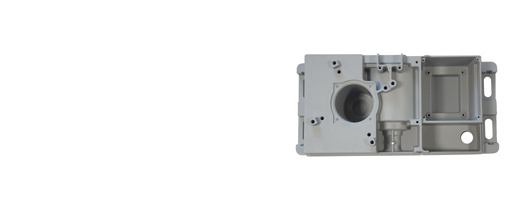
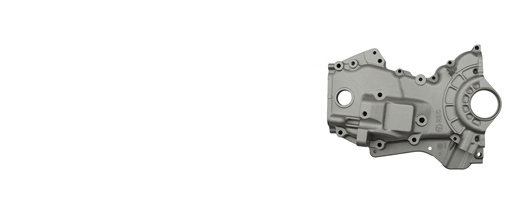
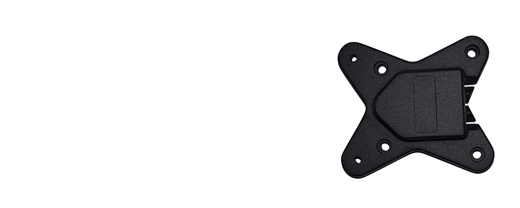



Can you complete CNC machining after die casting forming?
2026-06-30 15:00
In the custom manufacturing industry of aluminum structural components for electronics, new energy vehicles and automation equipment, many overseas buyers and design engineers keep raising a core technical question: Can you complete CNC machining after die casting forming? For industrial purchasers without rich casting experience, they often confuse the production logic of high-pressure die casting and secondary precision processing, and worry that casting defects will make subsequent CNC processing impossible, or excessive processing costs will erode the overall budget of customized parts. As a professional manufacturer focusing on aluminum alloy casting and integrated machining, we combine years of production cases of aluminum die casting parts, mold development experience and customer after-sales feedback to systematically analyze the feasibility, standardized process, cost control points and common risk avoidance of performing full CNC machining after die casting forming. This article will dismantle the whole industrial chain from mold design, blank casting, processing parameter setting to surface post-treatment, to answer all doubts of designers and purchasers about casting + CNC composite production.
1. Why Residual Defects Appear on Raw High-pressure die casting Workpieces
High-pressure die casting relies on high-speed injection of molten aluminum alloy into the closed cavity of a die casting mold under high pressure to quickly form blanks of complex shell structural parts. Restricted by material fluidity, mold exhaust structure, cooling cycle and release agent spraying technology, raw castings taken out from the mold inevitably carry inherent casting defects, which is the core reason why almost all precision aluminum parts need CNC machining after forming.
Common surface defects of as-cast blanks include casting flash, shrinkage porosity, air holes, cold shut and uneven draft angle. Casting flash is formed by molten metal penetrating the tiny fit gap between movable mold and fixed mold during injection; flash layers are irregular and hard, which cannot meet the assembly dimensional tolerance and flatness requirements of electronic equipment housings, and must be completely removed through CNC milling. Shrinkage porosity and tiny air holes mostly appear on thick-wall positions of aluminum die casting parts. Although small pores do not damage the overall structural strength of castings, if reserved without CNC removal, they will lead to bubbling, peeling and rust spots during later powder coating or chemical conversion coating, directly scrapping finished products.
In addition, the draft slope designed on the inner and outer walls of the die casting mold is set for smooth demolding of blanks. The inclined surface cannot realize the tight assembly matching of screws, connectors and sealing rings. All positioning surfaces, mounting bosses, threaded holes and sealing grooves on the workpiece must be flattened, drilled, tapped and milled by CNC equipment to reach the drawing tolerance standard. Many customers once put forward the idea of canceling secondary machining and directly using die cast blanks as finished products to save costs, but after trial production, they found that the dimensional deviation of unprocessed castings can reach 0.3mm to 0.8mm, which is far beyond the ±0.05mm tolerance required by industrial electronic equipment, proving that independent die casting forming cannot meet precision assembly standards.
Not all casting defects can be completely eliminated by post-CNC machining. If the mold exhaust channel is unreasonable, a large area of internal air holes with a diameter of more than 1mm appears inside the casting wall, and the holes will be exposed after cutting the blank surface, resulting in product failure. Therefore, the precondition for smooth post-CNC processing is to optimize the gating system, exhaust groove and cooling water channel of the die casting mold in the early stage of mold development to control the number and size of internal defects of blanks within the machinable range.
2. How to Set Reasonable CNC machining allowance for Aluminum Castings
CNC machining allowance refers to the metal thickness reserved on each functional surface of die cast blanks for subsequent cutting and milling, which is the core connection parameter linking die casting production and CNC processing. Too small allowance cannot cover dimensional deviation and surface defect layers of castings; too large allowance will increase CNC processing time, tool loss and raw material consumption, significantly raising unit production costs of aluminum die casting parts.
For thin-wall industrial aluminum enclosures with wall thickness of 2–4mm, the standard single-sided CNC machining allowance is controlled between 0.3mm and 0.6mm for flat outer surfaces. For thick-wall installation bases and boss structures with wall thickness over 5mm, the single-sided allowance can be adjusted to 0.6mm–1.0mm to offset shrinkage deformation during casting cooling. Thread hole positions need to reserve a larger solid blank, with a processing allowance of 1.0mm–1.5mm on one side, to avoid tapping tooth collapse caused by tiny internal pores of castings. The inner sealing groove with high flatness requirements needs uniform allowance distribution; uneven reserved thickness will lead to tool vibration during high-speed milling, resulting in groove surface ripple marks that affect sealing performance.
The setting of allowance is closely bound to the precision grade of the die casting mold. High-precision molds processed with imported mold steel have small blank dimensional deformation, so the reserved processing allowance can be reduced appropriately to save processing costs. Low-precision trial molds with simple processing technology have large blank shrinkage deviation, so designers need to increase the overall machining allowance by 0.2–0.4mm to avoid incomplete cutting of defective layers during CNC processing.
Many small-sized foundries blindly reduce the CNC machining allowance to cut raw material costs in mass production, ignoring the fluctuation of casting dimensional accuracy in continuous production. In mass production of 1,000–5,000 pieces, the thermal expansion of the mold cavity after long-term high-temperature work will lead to gradual deviation of blank size. Insufficient allowance will cause partial areas of the workpiece to fail to be cut, retaining casting flash and pores, and such defective products cannot be reworked and can only be scrapped. Professional manufacturers will adjust the allowance range according to the customer’s order quantity: small-batch prototype orders retain larger allowances for flexible adjustment; mass stable orders optimize the allowance to the minimum reasonable value to balance cost and yield.
3. Step-by-Step Standard Process: Die Cast Forming Followed by Precision CNC Machining
The mature integrated production flow of die casting forming + full CNC machining has been verified by tens of thousands of batches of aluminum die casting parts for new energy vehicle accessories and industrial control shells, and each link is set with strict inspection standards to ensure finished product qualification rate. The complete process is divided into 8 core steps: mold preheating → molten aluminum injection forming → blank cooling demolding → flash trimming → blank annealing stress relief → rough CNC machining → finish CNC machining → cleaning and surface pre-treatment.
After completing high-pressure die casting forming, workers first use hydraulic trimming molds to remove large-area casting flash along the workpiece edge; only tiny residual flash on small structural corners is left for subsequent CNC milling removal. Then the blanks are sent to the annealing furnace for low-temperature stress relief treatment. Internal thermal stress generated during rapid cooling of castings will cause slow deformation of workpieces within 7–15 days after forming. If CNC machining is carried out without stress relief, finished products will deform after processing, leading to dimensional out-of-tolerance of threaded holes and sealing surfaces. Stress relief is an indispensable pre-process before CNC machining, which many small factories omit to shorten delivery cycles, bringing hidden quality troubles to customers.
Rough CNC machining is the first cutting procedure, removing most of the reserved CNC machining allowance, quickly cutting flat uneven casting surfaces, drilling primary through holes and milling rough positioning grooves. The cutting speed of rough machining is fast, focusing on removing defective layers and redundant metal, without pursuing ultra-precise dimensional accuracy. After rough machining, workers conduct full inspection to screen out blanks with large-area exposed pores and cracks, avoiding wasting finish machining time on unqualified semi-finished products.
Qualified semi-finished products enter finish CNC machining. High-precision four-axis and five-axis machining centers are used for fine milling of sealing surfaces, precise tapping of threaded holes, fine boring of assembly pin holes and polishing of appearance surfaces. All dimensional indicators are controlled within the tolerance range specified by customer drawings. After finish machining, ultrasonic cleaning removes cutting fluid, metal chips and oil stains remaining on the workpiece surface, laying a clean foundation for subsequent glass bead blasting, chemical conversion coating and polyester powder coating.
The whole process fully proves that complete CNC machining after die casting forming is a mature, standardized and feasible production mode. Every functional surface of cast blanks can realize micron-level precision control through secondary processing, solving the precision bottleneck that single high-pressure die casting cannot break through.
4. How the Structure of die casting mold Affects Post-CNC Machining Efficiency
The early design of the die casting mold determines 70% of the difficulty and efficiency of subsequent CNC machining. Many new designers only pay attention to the molding effect of castings while ignoring the convenience of secondary processing, resulting in complex tool paths, long processing time and high scrap rate during CNC production.
The parting line position of the mold is the most critical design point affecting post-processing. If the parting line is designed to pass through the customer’s required appearance surface and sealing plane, a thick flash layer will be formed on the core functional surface of the blank, requiring multiple times of high-precision milling in finish machining, greatly extending single-piece processing time. Experienced mold designers will adjust the mold core structure to move the parting line to non-appearance, non-assembly edge positions, minimizing the flash thickness on precision surfaces and reducing CNC cutting workload by more than 30%.
The design of mold ejection pins also interferes with subsequent machining. Ejection pin marks formed on the blank surface cannot be eliminated by simple trimming. If the pin mark falls on the flat assembly surface, the whole plane needs to increase the CNC machining allowance for full milling to remove the pit traces of ejection pins. Optimizing the ejection layout of the mold and concentrating ejection pins on non-functional bosses can save a lot of processing steps. In addition, the mold cooling water channel layout affects the uniform cooling degree of blanks. Uneven cooling will lead to bending deformation of thin-wall castings, and CNC equipment needs additional leveling processing before formal cutting, increasing production procedures and labor costs.
For customized complex multi-cavity aluminum die casting parts, the mold needs to reserve CNC positioning reference bosses during cavity design. Uniform and stable reference points can realize automatic fixture clamping of CNC equipment, realizing mass automatic processing and improving production efficiency. If no positioning reference is reserved on the mold, workers need manual clamping and calibration for each workpiece, which greatly reduces the daily output of CNC workshops and pushes up unit processing costs.
Before mold trial production, professional manufacturers will simulate the whole CNC processing path of blanks through 3D software, check whether the mold structure will cause processing dead angles, tool collision and excessive allowance, and modify the mold core structure in advance to avoid mass production losses after mold completion.
5. Cost & Quality Comparison: One-Step Casting vs. Casting + Full CNC machining
Many customers ask whether it is necessary to arrange full CNC machining after die casting forming from the perspective of cost control. We compare the two production modes from four dimensions: dimensional precision, finished product yield, unit cost and applicable scenarios, to provide clear selection reference for purchasers.
In terms of dimensional precision: single high-pressure die casting forming can only reach a tolerance of ±0.2mm–±0.8mm, which is only suitable for low-demand non-assembly decorative parts. The composite process of casting + full CNC machining can stabilize the tolerance within ±0.03mm–±0.05mm, fully matching the assembly requirements of sensors, circuit boards, sealing components and precision connectors, which is the mainstream production scheme for industrial aluminum housings.
In terms of finished product yield: single casting without post-processing has a high blank yield, but the unremoved internal pores and surface flash will lead to a scrap rate of more than 20% after surface finishing. Cast blanks after full CNC machining have all surface defect layers cut off; the yield of finished products after spraying and coating can be stabilized above 96%, and the hidden rework and after-sales loss cost is far lower than one-step casting production.
In terms of unit cost: one-step die casting without CNC processing has a low single blank price, but the mold development cost is extremely high, requiring ultra-precise mold cavity to reduce blank deviation, only suitable for mass orders over 50,000 pieces. The casting + CNC composite process moderately disperses precision requirements to two working procedures; the development cost of the die casting mold is reduced by about 15%–25%, and although additional CNC processing fees are added, the overall comprehensive cost of medium and small orders (100–10,000 pieces) is more competitive. For prototype trial orders of 50–200 pieces, the composite process can greatly shorten mold development cycle and save customers’ early R&D cost investment.
Applicable scenario classification: one-step die casting without secondary processing is only used for low-precision non-structural decorative shells without assembly requirements. All precision industrial electronic shells, new energy vehicle structural brackets, hydraulic valve bodies and communication equipment aluminum boxes must adopt die casting forming plus complete CNC machining. Even if customers put forward temporary cost-saving demands, manufacturers will clearly inform the hidden risks of unprocessed blanks such as assembly failure, surface coating peeling and dimensional deformation in later use.
From the long-term cooperation perspective of supply chain, the integrated production mode of casting and CNC processing can realize unified quality control of blanks and finished products by the same manufacturer, avoid quality disputes caused by separate outsourcing of casting and processing, shorten the overall delivery cycle, and provide customers with one-stop customized solutions for aluminum die casting parts.
Related News
More >-
![What aluminum alloy grades do you use for die casting production?]()
What aluminum alloy grades do you use for die casting production?
Aluminum alloy grade selection is critical for die‑casting output, influencing castability, mechanical performance and surface treatment effect. Mainstream grades include ADC12, A360, A380 and YL102, each with distinct strengths and limitations. Project engineers should assess load requirements, service environment, CNC machining needs and cost before finalizing material. Cross‑border projects often face risks from inconsistent naming standards and post‑tooling alloy replacement, which may trigger mold modification and delays. Buyers should share real application scenarios, while suppliers need to clarify material trade‑offs and provide test reports. Proper alloy specification effectively reduces defects and stabilizes mass‑production quality.
-
![Industry News: Aluminum Die Casting Sector Faces Dual Challenges of Intelligent Upgrade & EU CBAM Compliance in 2026]()
Industry News: Aluminum Die Casting Sector Faces Dual Challenges of Intelligent Upgrade & EU CBAM Compliance in 2026
In 2026, the **aluminum die casting** industry grows steadily driven by lightweight automotive and furniture hardware demand. Integrated **aluminum alloy die castings** help reduce product weight and production costs, while manufacturers upgrade vacuum casting and recycled aluminum melting lines to cut carbon emissions. For exporters, EU CBAM imposes strict carbon rules on HS 7616 die casting goods. European clients qualify for a de-minimis exemption if yearly imports stay below 50 MT. Factories in Foshan prepare bilingual shipment records, HAWBs and stamped weight certificates as compliance proof. Surface finishing uses Nippon powder and cost-effective imitation Tiger powder. Going forward, intelligent production and full carbon traceability will become essential competitiveness for export-focused die casting manufacturers.
-
![How to Control Deformation of Thin-Wall Aluminum Die Casting Components]()
How to Control Deformation of Thin-Wall Aluminum Die Casting Components
This article focuses on dimensional deformation problems of precision thin-wall die casting parts, analyzing five core influencing factors and solutions. Unbalanced mold thermal balance and inconsistent solidification shrinkage cause asymmetric casting warpage, while rapid forming produces hidden residual stress leading to delayed deformation after CNC processing. Thin-wall structures with low rigidity are highly sensitive to cooling difference and ejection force. Systematic optimizations including conformal cooling, balanced gating design and stress relief treatment effectively stabilize flatness and dimensional tolerance, solving the most common batch deformation defects of high-precision aluminum die casting components.
-
![What Are the Most Common Defects in High-Pressure Aluminum Die Castings?]()
What Are the Most Common Defects in High-Pressure Aluminum Die Castings?
This article focuses on frequent flaws in high-pressure die casting aluminum components, covering five core dimensions: formation of pores and shrinkage cavities, surface defects caused by flawed die casting mold design, the dual influence of CNC machining allowance on flaw coverage, severe damage casting defects bring to post-process surface finishing, and full-chain improvement plans for qualified aluminum die casting parts. Internal voids cannot be removed by CNC cutting; residual surface flaws trigger coating bubbling, discoloration and batch scrap. Optimizing mold exhaust, cooling and injection parameters is the fundamental way to reduce defects instead of simply increasing machining allowance.
-
![How much is the modification fee for existing die casting tooling?]()
How much is the modification fee for existing die casting tooling?
Centered on the inquiry of modification fees for existing die casting tooling, this article classifies mold revisions into free minor trimming, medium paid adjustment and heavy structural reconstruction, and elaborates five key pricing factors including mold cavity revision area, supplementary steel material, post-process matching, lead time and remaining mold shot life. It breaks down modification fees into steel, processing, trial and auxiliary cost modules for transparent quotation. Pre-production DFM analysis effectively reduces unnecessary revision work and related costs by optimizing product structures in advance. Multiple cost-saving strategies such as modular inserts and synchronous post-casting CNC machining coordination are introduced to cut clients’ revision expenditure. All charges follow standardized rules for aluminum alloy high-pressure die casting production projects, clearly distinguishing free factory liability rework and customer-borne design change fees.
-
![Can you customize die casting tooling according to our 3D STP drawings?]()
Can you customize die casting tooling according to our 3D STP drawings?
This article centers on the inquiry of customizing die casting tooling with client STP 3D drawings, elaborating five core links including STP data value, standardized DFM analysis workflow, precision mold cavity machining, mass high-pressure die casting matching and post-trial PVD surface coating coordination. STP format ensures complete solid geometric data and cross-CAD compatibility, serving as the digital blueprint for all mold design and inspection work. Factories conduct manufacturability simulation, CNC automatic programming and closed-loop dimensional testing based on STP models to avoid structural defects and mold revisions. The STP-driven workflow optimizes alloy adaptation, casting cycle time and hidden hanging position layout for plating, supporting full-cycle services from tooling fabrication, sample trial to long-term mold storage. Submitting intact STP files shortens development lead time, stabilizes casting quality and cuts cross-border technical communication costs for global hardware purchasers.
-
![What applications use zinc alloy die casting parts?]()
What applications use zinc alloy die casting parts?
Zinc alloy die cast parts are widely used across multiple industries thanks to excellent fluidity, good toughness and great electroplating performance. They are most common in daily hardware and locks, as well as bathroom and furniture decorative components requiring fine appearance and wear resistance. They also serve consumer electronics, small home appliances, automotive interior accessories and motorcycle parts. Besides, craft ornaments, gifts and miniature precision mechanisms adopt these castings for complex shaping needs. With low mold cost and stable forming quality, zinc alloy die castings fit products with complex structures, decorative demands and medium or small load conditions perfectly.
-
![What Defects Often Occur in Aluminum Alloy Die Casting?]()
What Defects Often Occur in Aluminum Alloy Die Casting?
This article introduces five common defects ofaluminum alloy high-pressure die casting, including porosity, cold shut, shrinkage cavity, warpage and die sticking. Porosity comes from trapped gas inside parts, while cold shut belongs to surface filling defects. Shrinkage defects are caused by volume contraction during cooling, and uneven stress leads to part warpage. Die sticking and burrs are related to mold maintenance and process parameters. Most defects result from unreasonable mold design, poor die casting process and insufficient maintenance. Reasonable process optimization and regular mold maintenance can greatly reduce defect rate and improve finished product quality.
Get the latest price? We'll respond as soon as possible(within 12 hours)