
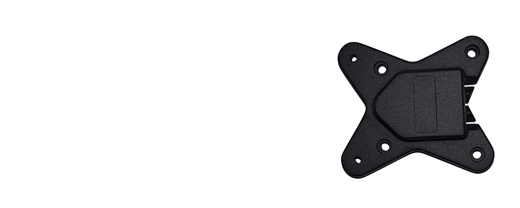



2025 Furniture Die-Casting Connectors: Precision, Aesthetics and Global Demand Drive Industry Upgrade
2026-01-26 15:30
The global furniture die-casting connector industry is ushering in a new round of growth in 2025, fueled by the rising demand for smart home furniture, the pursuit of product durability, and the advancement of die casting technology. As core components linking furniture structures, die-casting connectors are breaking the traditional positioning of "functional accessories" and evolving toward high precision, multi-material integration, and aesthetic integration. According to China Report Hall, the global furniture hardware connector market size is expected to exceed $18 billion in 2025, with die-casting products accounting for over 55% due to their superior structural stability <superscript:1.
Material innovation has become a key driver of product upgrading in the industry. Zinc alloy and aluminum alloy are the mainstream materials for furniture die-casting connectors, each with unique advantages. Zinc alloy, represented by Zamak 3 and Zamak 5, boasts excellent die casting performance, enabling the production of complex, thin-walled precision parts with smooth surfaces, and can undergo multiple surface treatments such as electroplating and spraying <superscript:2. Aluminum alloy connectors, on the other hand, are favored in lightweight furniture due to their high strength, corrosion resistance, and precise dimensional control, perfectly matching the demand for modern minimalist dining tables and chairs <superscript:4. Dongguan Xiongsheng Hardware, a leading enterprise, has established 12 process standards for mainstream materials, strictly controlling raw material lead content below 0.03% to ensure product durability <superscript:5.
Technological iteration is optimizing the production efficiency and precision of die-casting connectors. Enterprises are increasingly adopting intelligent die casting equipment and modular production systems to address seasonal order fluctuations. Xiongsheng Hardware has realized 2-hour rapid material switching between zinc and aluminum with 10 core devices, and shortened the die casting mold development cycle from 7 days to 2 days through prefabricated standard mold bases <superscript:5. Meanwhile, MES systems are widely used in the die casting process to monitor filling speed in real time, controlling deviations within ±0.1m/s, and three-coordinate measuring instruments with ±0.003mm precision ensure that each connector meets strict dimensional requirements <superscript:5.
Aesthetic integration and customization have become new competitive focuses. Modern furniture pays more attention to the overall style unity, prompting die-casting connectors to move beyond pure functionality. Enterprises like Dihui Die Casting integrate design sense into connectors, through sophisticated polishing and spraying treatments, creating a delicate textured surface that enhances the furniture’s fashion and elegance <superscript:4. Customized services are also expanding—manufacturers can tailor die casting solutions according to different furniture styles, optimizing connector structure for easy installation and disassembly while ensuring stability<superscript:4. This customization capability is particularly popular in the European and American markets, where DIY culture prevails <superscript:6.
Global market demand shows strong growth momentum, with Asia-Pacific as the core supply and demand hub. Chinese enterprises, relying on mature die casting technology and cost advantages, occupy an important position in the global supply chain. Xiongsheng Hardware’s products are exported to Germany, Italy, Japan and other countries, and it provides OEM services for several Japanese brands, winning recognition with high quality and reasonable prices <superscript:3. The Middle East market, driven by infrastructure investment, has seen an 8.3% growth in demand for structural connectors, while the Southeast Asian market’s demand for furniture hardware is growing at over 20% due to demographic dividends <superscript:6.
Sustainability and quality control are becoming industry development thresholds. Enterprises are strengthening environmental management in the die casting process, adopting energy-saving equipment and recycling systems to reduce carbon emissions. Xiongsheng Hardware adheres to a three-level inspection system, from raw material spectrum detection to finished product full inspection, ensuring a 99.2% product qualification rate <superscript:5. Meanwhile, compliance with international standards such as ISO9001 has become a basic requirement for enterprises to enter the global market, promoting the industry’s standardized development.
Looking ahead, the furniture die-casting connector industry will focus on intelligent upgrading, material innovation and global layout. With the deep integration of smart home and customized furniture trends, die casting technology will continue to break through, making connectors more precise, durable and aesthetically pleasing. Enterprises that grasp the balance between efficiency, quality and design will gain a competitive edge in the global market, driving the industry toward high-end, sustainable development.
Related News
More >-
![Industrial Aluminum Die-Casting Molds & Precision Castings: Empowering High-Efficiency Equipment Operation]()
Industrial Aluminum Die-Casting Molds & Precision Castings: Empowering High-Efficiency Equipment Operation
With the upgrading of industrial manufacturing, industrial aluminum die-casting molds and precision aluminum die-castings have become key components for industrial equipment. Our professional industrial die-casting dies and mature precision die-casting processing ensure that industrial aluminum die-cast components have high precision, strong durability and excellent performance, widely used in pumps, valves and automation equipment. Strict quality control runs through the whole production process to meet industrial standards. We provide customized and bulk production services, and welcome industrial enterprises to contact us for in-depth cooperation and win-win development.
-
![High-Strength Architectural Aluminum Die-Cast Components & Custom Mold Manufacturing Solutions]()
High-Strength Architectural Aluminum Die-Cast Components & Custom Mold Manufacturing Solutions
Modern construction and green building projects raise higher requirements for outdoor metal accessories. Architectural die-cast molds and high-quality aluminum structural castings play a key role in architectural connection and decoration fields. Relying on professional building die tooling design and mature precision forming technology, factory-produced construction aluminum alloy components feature strong weather resistance, high strength and stable size. Strict quality control ensures long-term outdoor service performance. We support customized design and mass production of all kinds of architectural aluminum die-cast parts, and welcome global buyers to contact us for stable cooperation and tailored solutions
-
![Lightweight Manufacturing Excellence! Foshan Jiawei Metal Unlocks High-End Production of Aluminum Die-Casting Industrial Components]()
Lightweight Manufacturing Excellence! Foshan Jiawei Metal Unlocks High-End Production of Aluminum Die-Casting Industrial Components
This article presents our professional aluminum die-casting industrial parts, including motor housings, battery trays, robot connectors, pump bodies, and 5G heat dissipation housings. With high-pressure, vacuum and semi-solid die-casting technologies, we ensure high precision, density and lightweight performance, supported by strict quality control and customized design services. Our products are widely used in automotive, new energy, machinery and other fields. We sincerely welcome customers with aluminum die-casting production demands to contact us for cooperation.
-
![Aluminum Mechanical Die-Cast Parts and Die Casting Molds: Powering Precision and Durability in Industrial Machinery]()
Aluminum Mechanical Die-Cast Parts and Die Casting Molds: Powering Precision and Durability in Industrial Machinery
Aluminum furniture die castings and die casting molds are core to the modern furniture industry’s shift toward durability, sustainability and minimalist design. Aluminum die casting technology, especially High-Pressure Die Casting (HPDC) and Vacuum Die Casting, produces lightweight, high-strength furniture components with precise tolerances. Advanced die casting molds with conformal cooling and 3D-printed inserts boost production efficiency. Driven by modular furniture and eco-friendly demands, the market grows steadily, with these components widely used in residential, commercial and outdoor furniture.
-
![Aluminum Motorcycle Die-Cast Parts and Die Casting Molds: Driving Performance and Lightweight Innovation in the Motorcycle Industry]()
Aluminum Motorcycle Die-Cast Parts and Die Casting Molds: Driving Performance and Lightweight Innovation in the Motorcycle Industry
Aluminum motorcycle die-cast parts and die casting molds are core to the motorcycle industry’s shift toward lightweight, high-performance and sustainable designs. Aluminum die casting technology, including High-Pressure Die Casting (HPDC) and Vacuum Die Casting, produces precise, durable components like engine casings and brake calipers. Advanced die casting molds ensure consistency for high-volume production, while innovations like conformal cooling channels boost efficiency. Driven by electrification and green goals, the market grows, solidifying die casting’s role in modern motorcycle manufacturing.
-
![Aluminum Die Castings and Die Casting Molds: Innovations Driving Global Manufacturing Excellence]()
Aluminum Die Castings and Die Casting Molds: Innovations Driving Global Manufacturing Excellence
March 27, 2026 — Aluminum die castings anddie casting molds are foundational to global manufacturing, driving efficiency, precision and sustainability across industries like automotive and electronics. Aluminum die casting technology, especially High-Pressure Die Casting (HPDC) and Vacuum Die Casting, enables mass production of lightweight, high-strength components with tight tolerances. Advanced die casting molds, made from high-grade materials and optimized via CAD tools, ensure consistent quality and long service life. Fueled by demand for lightweight parts and sustainability goals, their market grows steadily, with innovations in alloys and 3D-printed molds further expanding their applications in modern manufacturing.
-
![Aluminum Die-Casting for Construction: Jiawei’s Precision Components Build a Durable, Sustainable Future]()
Aluminum Die-Casting for Construction: Jiawei’s Precision Components Build a Durable, Sustainable Future
On March 15, 2026, Foshan Jiawei Precision Die Casting launched specialized aluminum die-cast construction components, catering to the global market growing at 6.5% CAGR through 2030. Leveraging high-pressure die casting (HPDC) and vacuum die casting, the parts use ADC12 and A356 alloys, with ±0.02mm precision, meeting ISO/ASTM standards and exceeding 1000-hour salt spray testing. Using 42% recycled aluminum, Jiawei cuts carbon emissions by 30%. Adopted in global major projects, the die-cast components reduce costs and installation time. Jiawei plans to expand into smart building parts and advance die-casting with AI-driven molds.
-
![Aluminum Die-Casting Excellence for Furniture: Jiawei’s Precision Components Elevate Durability and Design]()
Aluminum Die-Casting Excellence for Furniture: Jiawei’s Precision Components Elevate Durability and Design
On March 12, 2026, Foshan Jiawei Precision Die Casting launched a specialized series of aluminum die-cast furniture parts, catering to the global market growing at 5.8% CAGR through 2030. Leveraging high-pressure die casting (HPDC) and vacuum die casting, the parts use ADC12 and A380 aluminum alloys, with ±0.03mm precision, meeting WF2 standards and exceeding 500-hour salt spray testing. Using 40% recycled aluminum, Jiawei cuts carbon emissions by 28%. Trusted by global furniture brands, the die-cast components reduce production costs and assembly time. Jiawei plans to expand into smart parts and advance die-casting with AI-driven molds.
Get the latest price? We'll respond as soon as possible(within 12 hours)